
Winner of an Outstanding Award in the 2026 WLA Awards – Concept | Analysis and Planning category
The Natural Infrastructure (NAI) Technical Guidance Series is a six-part, landscape-led initiative embedding nature-inclusive design principles and social equity at a national scale across Peru’s infrastructure sector. This represents a transformative shift in Peru, reframing NAI from a supplementary environmental measure to a strategic planning system operating at national and catchment scale.
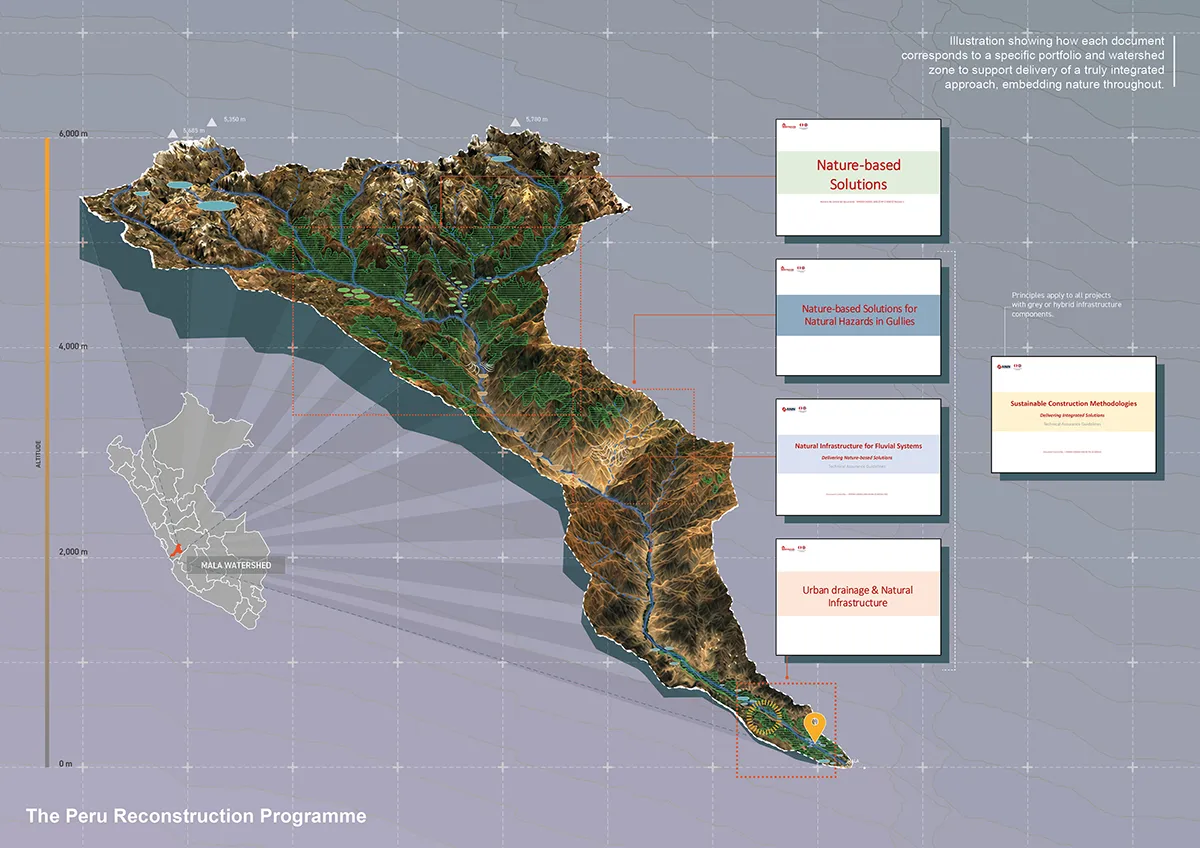
The 2017 El Niño phenomenon wreaked havoc across Peru’s coastal Andes region. More than 1.5 million people were affected, over 300,000 displaced, and an estimated $3.1 billion in damage incurred. In response, a government-to-government partnership between Peru and the UK was launched to rebuild and future-proof the nation’s damaged infrastructure in the face of climate breakdown. The >$8 billion programme has overseen the delivery of 71 schools, 9 healthcare facilities and integrated catchment management across 16 watersheds, including six city-wide drainage schemes.
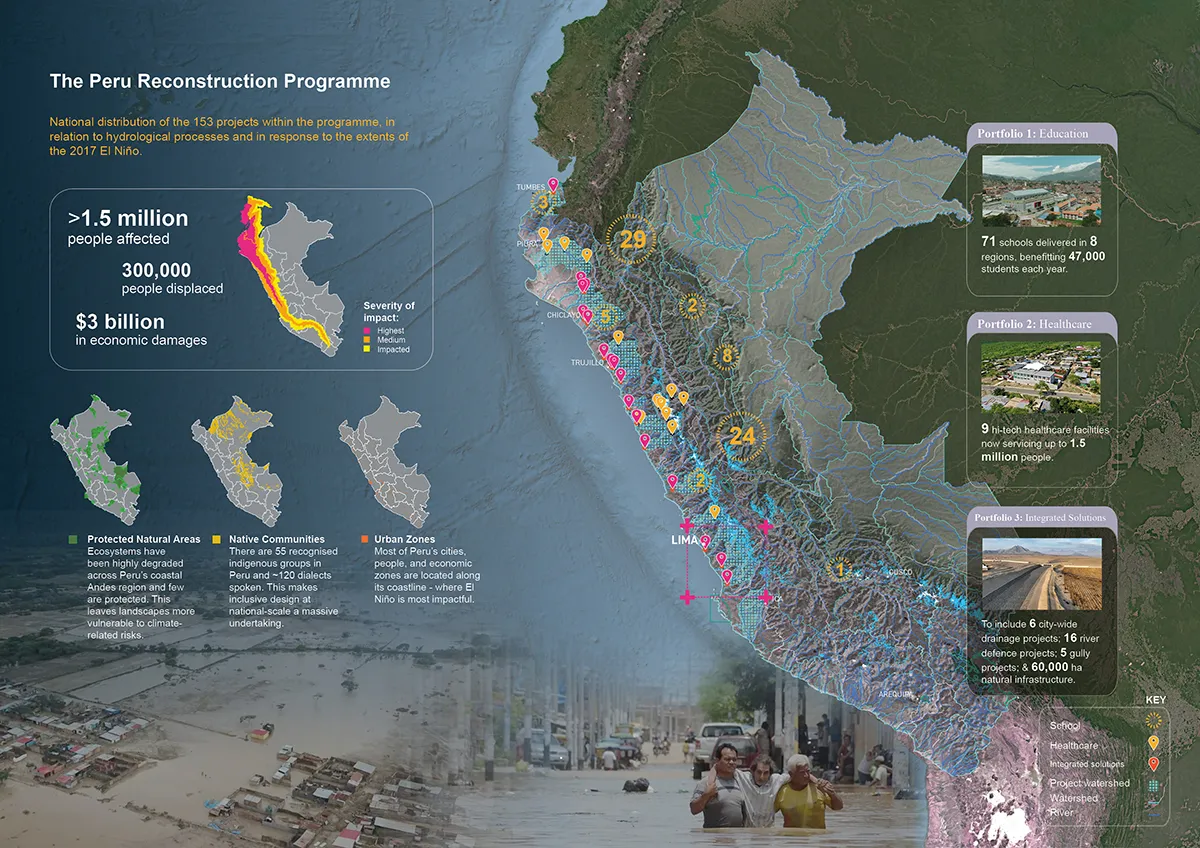
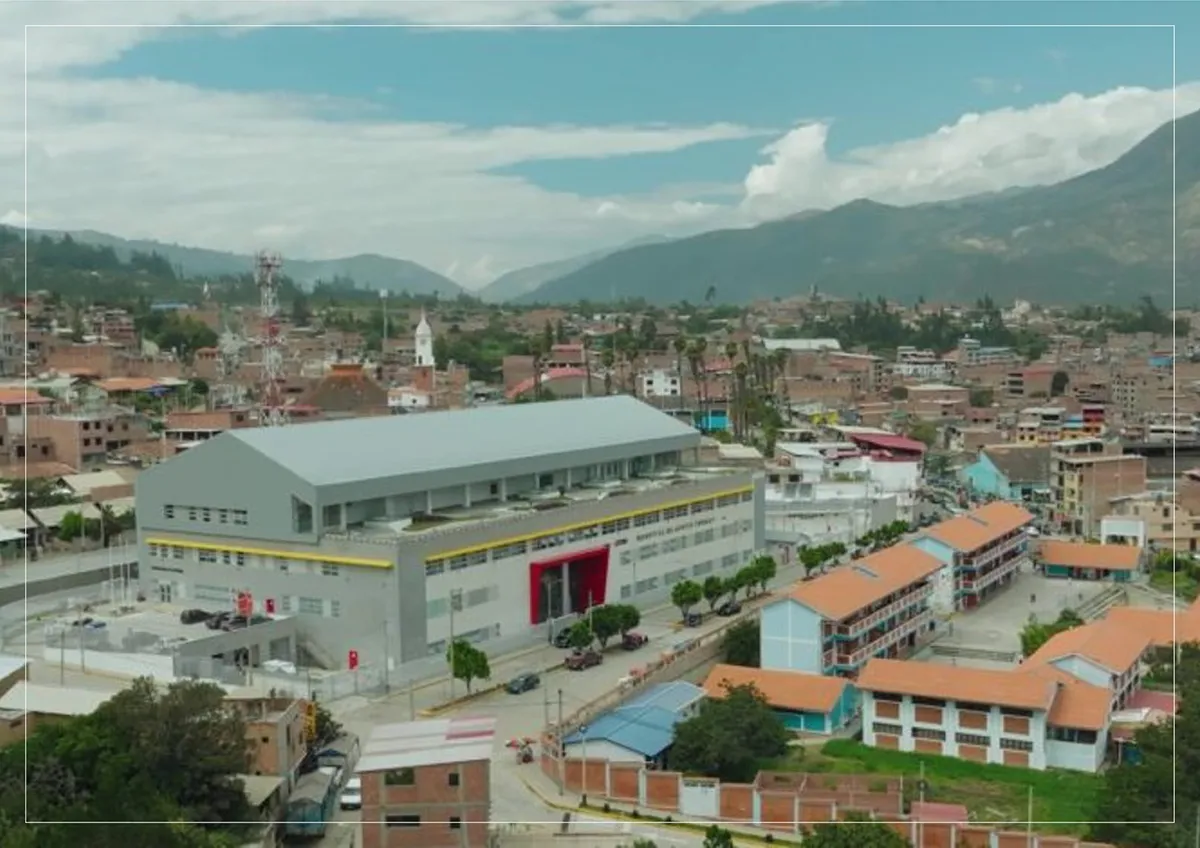

Chronic ecosystem degradation has weakened landscape resilience, with as little as 1% of Peru’s historic dry forest cover remaining. With knowledge, standards and environmental protection for nature limited and inconsistently applied across regions, decisions were inconsistent, risk increased and over-engineered solutions became common, creating a clear need for a robust, unifying planning framework. The guidance series shifted practice away from fragmented, asset-led responses towards adaptive, landscape-led planning, treating rivers, mountains, coast and cities as interconnected systems.
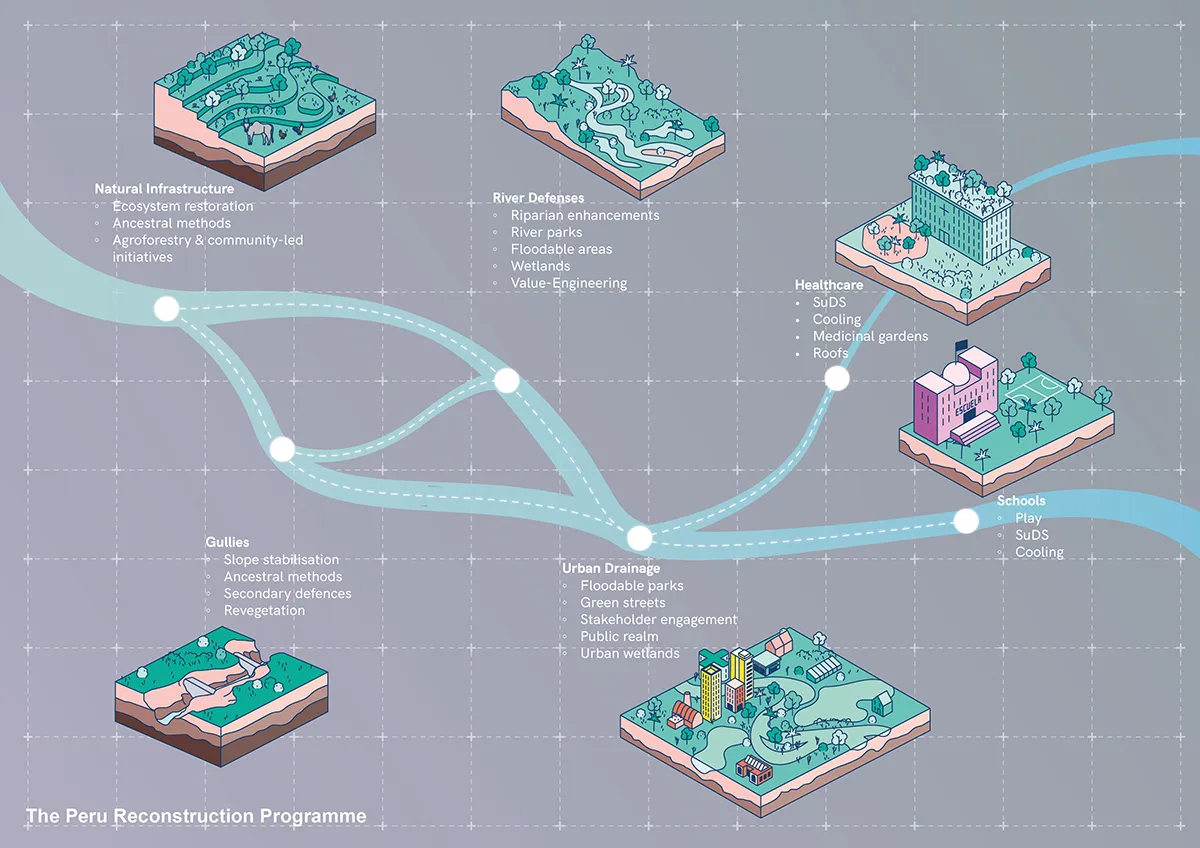
The pioneering series is grounded in rigorous analysis of landscape condition and NAI potential against historic baselines, projected future scenarios and international best practice. Desk-based research, field studies and community workshops informed where bespoke nature-based solutions deliver most value. In doing so, the guidance supports safer settlements, more resilient landscapes and long-term public value by enabling informed decisions that reduce risk while maximising social, environmental and financial benefits.
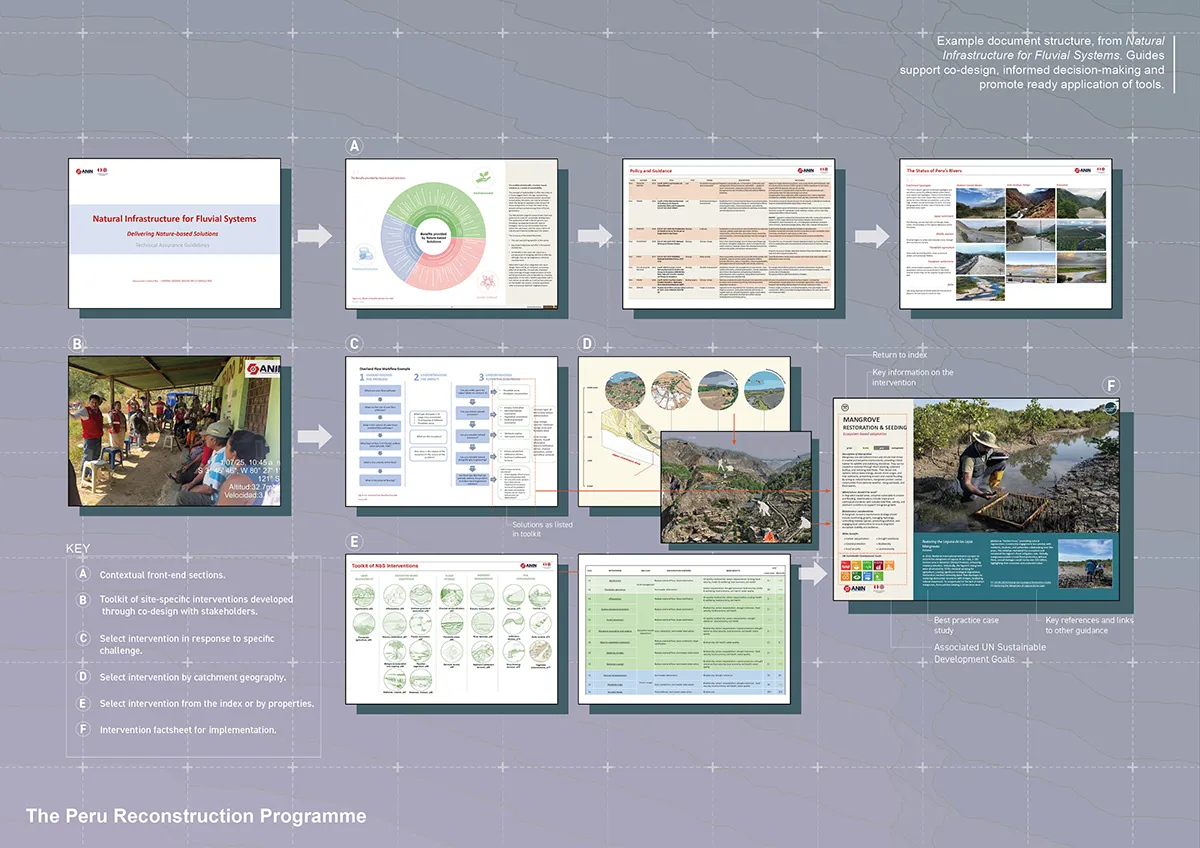
To ensure clarity and uptake, the guidance is presented through clear diagrams, typologies and decision pathways that explain site conditions, landscape processes and NAI opportunities. A visual toolkit sets out a structured menu of NbS and NAI interventions, showing where each is appropriate, the co-benefits delivered, and how interventions combine with conventional infrastructure. High-level implementation principles guide selection, sequencing, and long-term performance, making the guidance accessible to planners, engineers, and decision-makers.
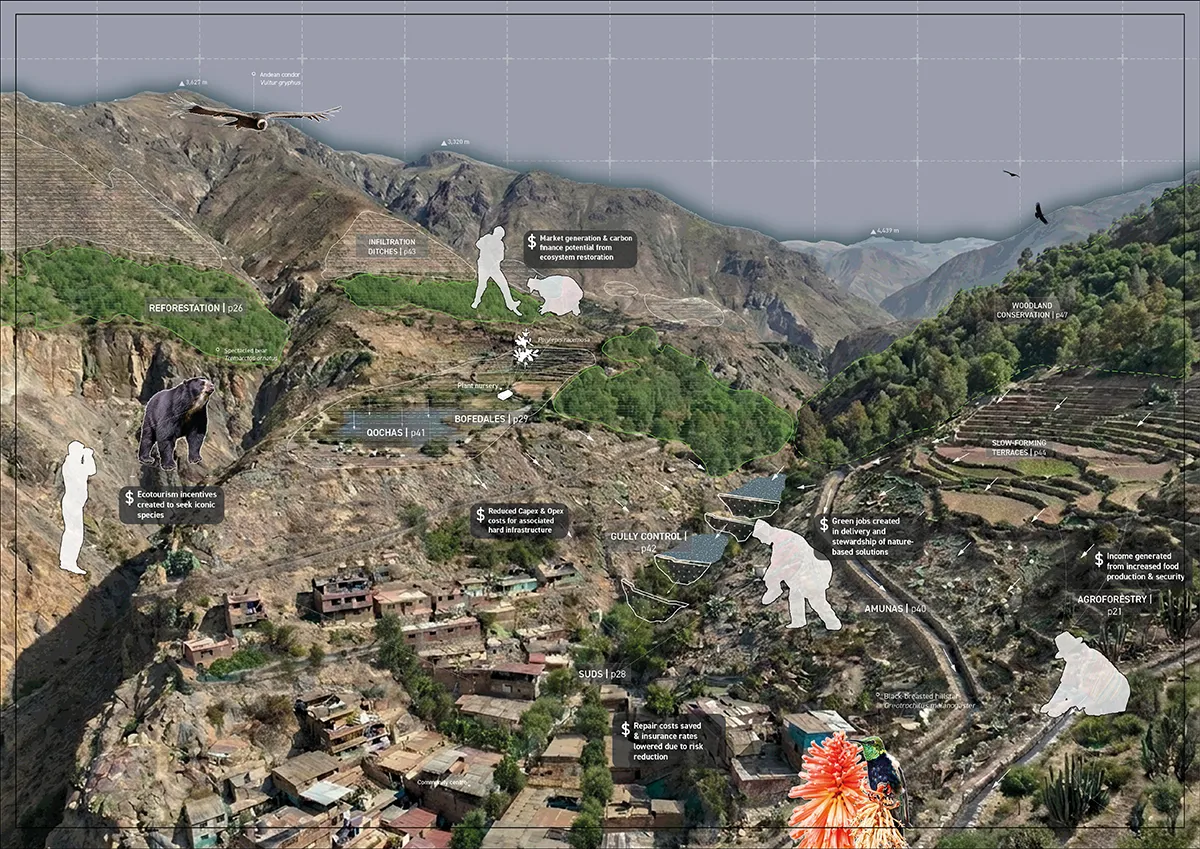
Each manual is tailored to active infrastructure portfolios and framed within Peru’s legislative context. Methodologies align with and strengthen existing environmental legislation, including the General Environment Plan’s special measures for fragile ecosystems, and provide financial guidance on Capex and Opex savings. Collectively, the manuals address blue, green and brown infrastructure through a consistent yet flexible framework responsive to local culture, landscape character and delivery conditions.
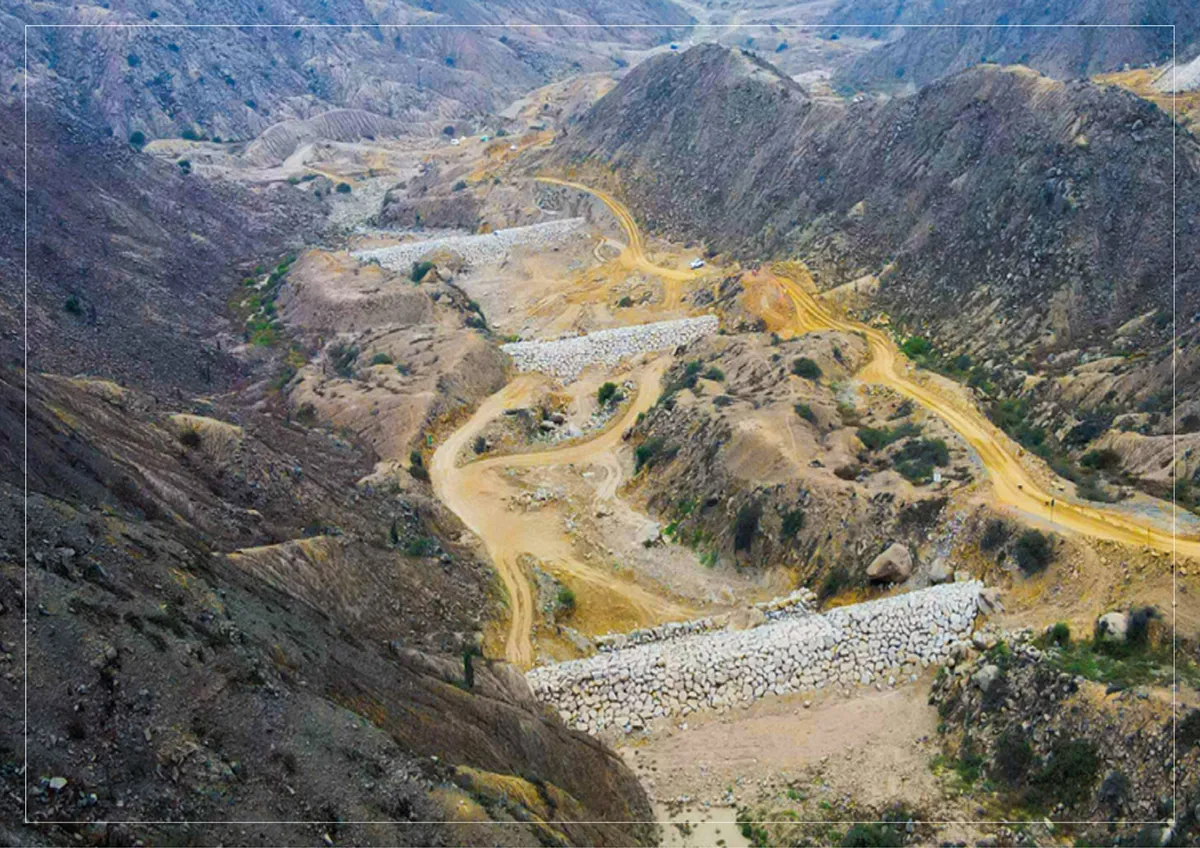
Delivering Nature-based Solutions was the first manual published, supporting a distinct $200 million NAI portfolio focused on overland flow and landslides in upper and mid catchments between 2,500 and 3,500 metres above sea level. Disseminated through technical workshops, it guided the 3,060-hectare Chicama pilot. Subsequent manuals for river defence, urban drainage and gully protection demonstrate how NAI complements engineered systems; in the Huarmey River Defence Project, guidance-led value engineering delivered $800,000 in Capex savings by replacing hard engineering with coastal wetland restoration.
Peru Reconstruction Programme: Natural Infrastructure Technical Guidance Series
Design Firm: UK Delivery Team (Arup, Mace and Gleeds)
Client: La Autoridad Nacional de Infraestructura de Peru (ANIN)
Images: Arup/UKDT
Text: Arup/UKDT
Be the first to comment