
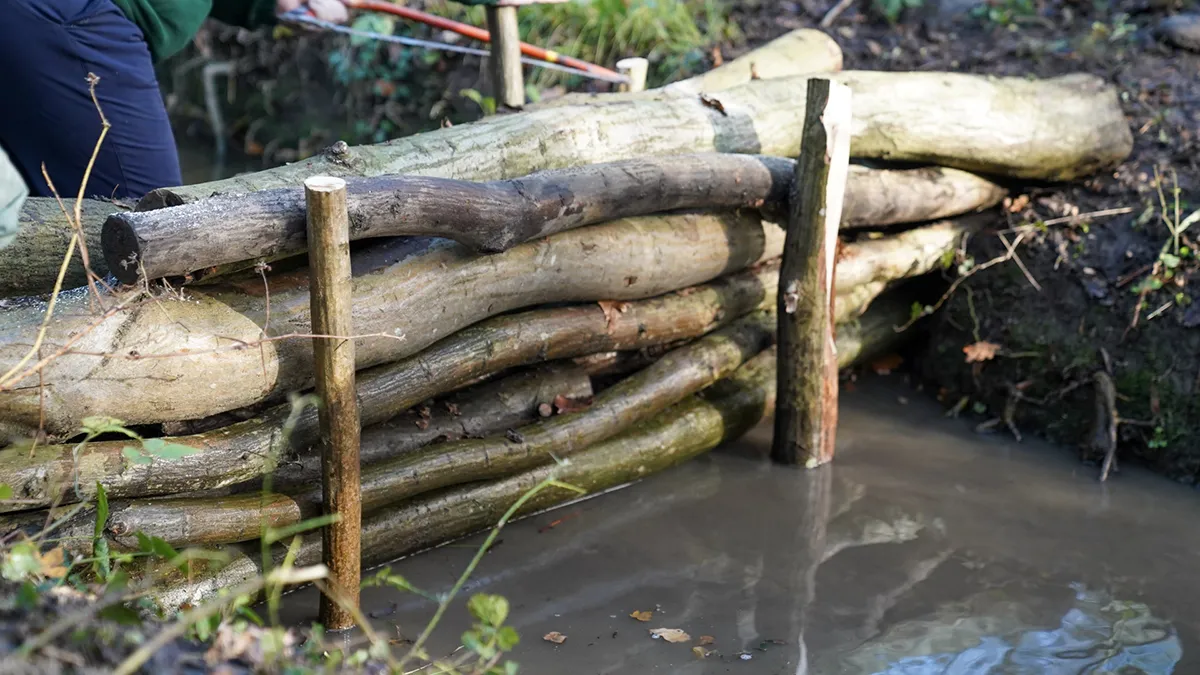
Currently, one of the largest natural flood-management projects is underway in Epping Forest, a large open space managed by the City of London Corporation. Over the next year, 374 purposefully designed ‘leaky dams’ will be installed in ditches and streams using natural materials such as logs and branches to slow water flow during periods of heavy rain.
The locations of each dam have been carefully selected using detailed hydrological modelling that predicts how rainfall moves through the Forest and identifies the points where slowing water will have the greatest downstream impact.
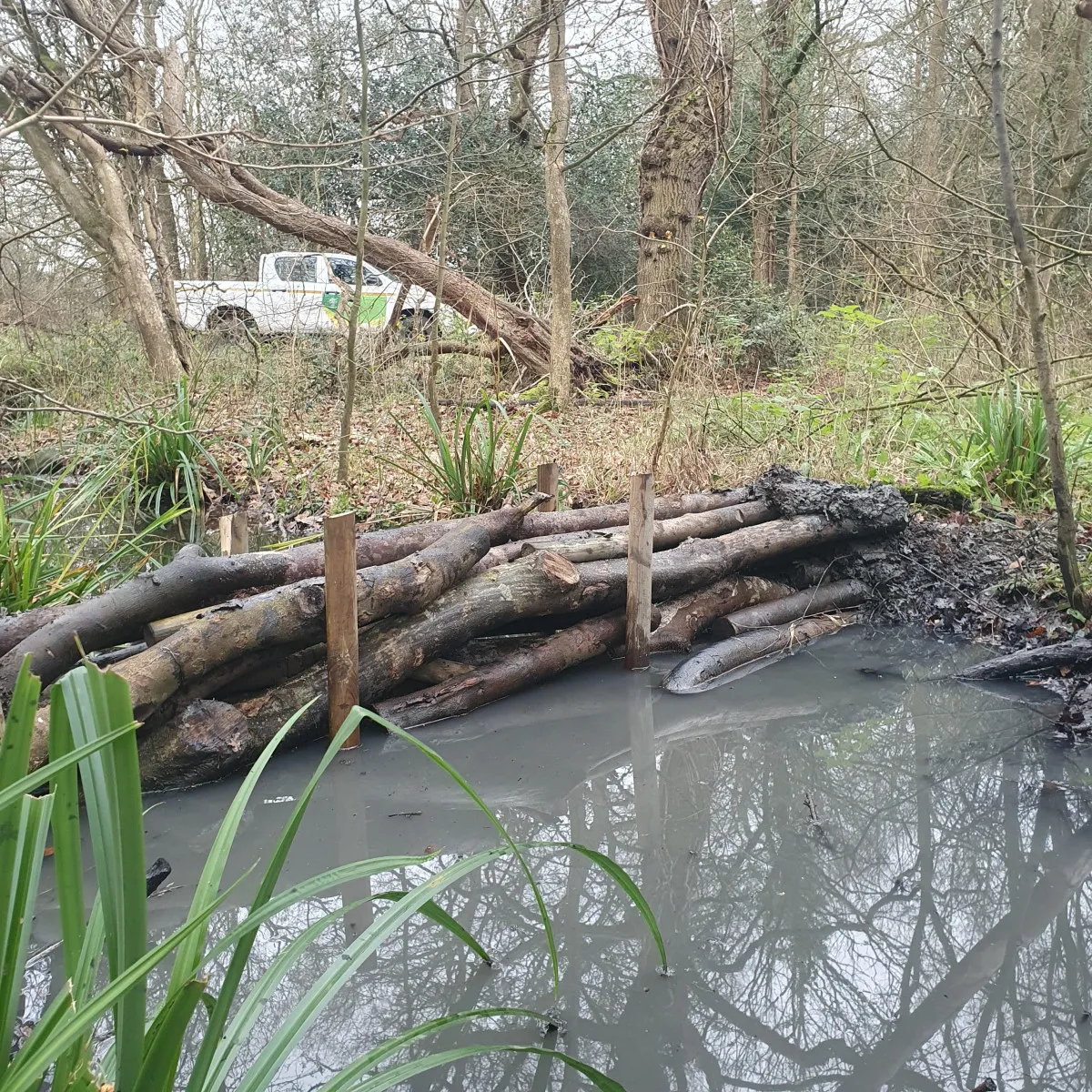
Once complete, the project is forecast to hold approximately 10,000 cubic metres of additional water within the Forest – the equivalent of four Olympic-sized swimming pools.
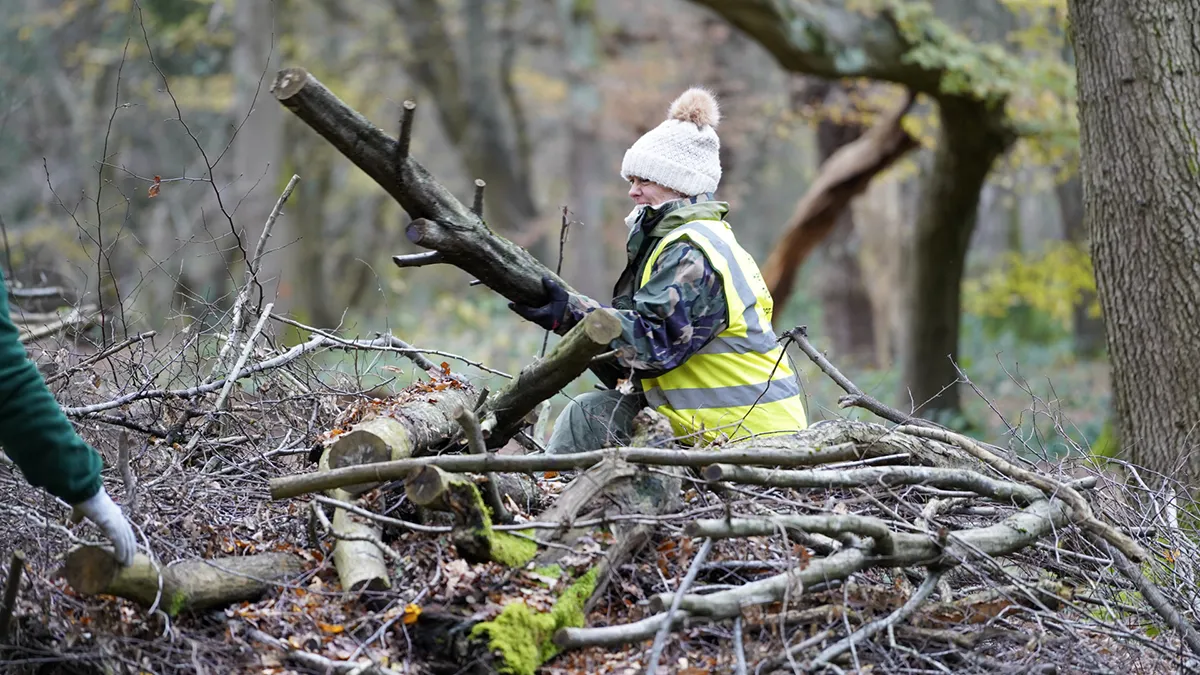
The vast majority of project materials will come directly from Epping Forest. Timber generated through routine habitat management and the City Corporation’s ongoing habitat restoration programme — including carefully planned thinning and pollarding to restore wood-pasture habitats and maintain tree health — will be reused to construct the leaky dams, reducing waste and working with the Forest’s natural processes.
As well as helping to protect hundreds of homes, this retention and slow release of water will deliver a range of benefits for the Forest and its wildlife by:
- Supporting tree health by retaining soil moisture and improving the Forest’s resilience to drought during dry weather
- Creating wetter habitats, allowing plants, fungi and wildlife to continue to thrive
- Improving water quality and soil stability by reducing erosion caused by fast-flowing water and trapping sediment before it moves downstream
The project is backed by £200,000 of Local Levy from the from the Thames Regional Flood and Coastal Committee’s Natural Flood Management programme, administered through the Environment Agency, and supported by a further £150,000 from the City Corporation’s own Climate Action Strategy funds – delivering climate-resilience benefits for local communities from Essex to London.
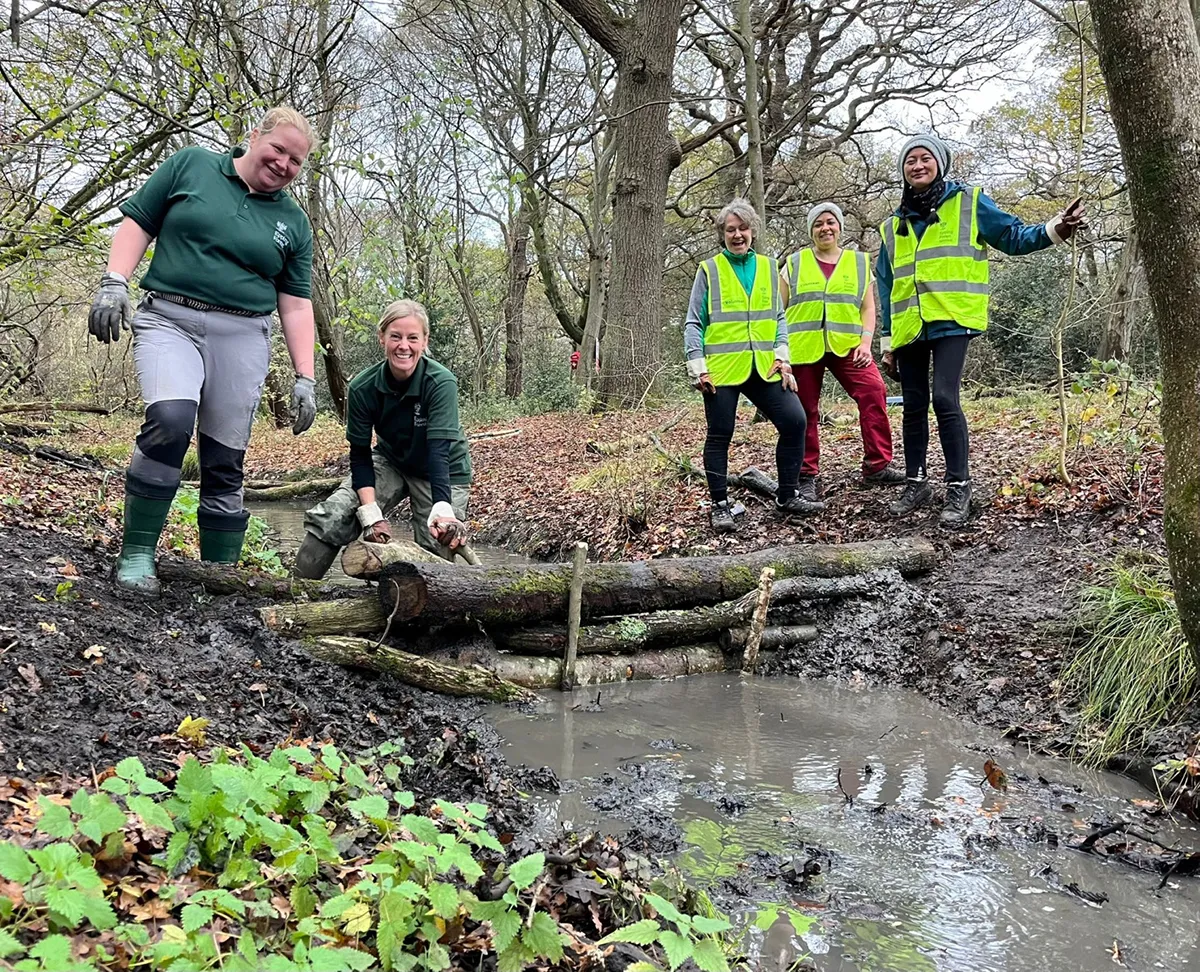
The Epping Forest Leaky Dams project is due to be completed by Spring 2027. This project is one of several Carbon Removals and Land Management initiatives to help protect the existing carbon stored by our open spaces and to increase their carbon capturing (sequestration) capacity.
For leaky dam volunteering days, visit – www.eventbrite.co.uk/cc/leaky-dam-building-4798037
List of project partners and volunteers
- Thames Regional Flood and Coastal Committee are the main funder for the project through their Natural Flood Management (NFM) programme.
- Essex County Council are the lead local flood authority (LLFA) and lead applicant for the NFM grant; oversees governance, procurement, and delivery.
- London Borough of Waltham Forest are the partner LLFA and supported with the design, supporting volunteers and community engagement.
- London Borough of Redbridge and Epping Forest District Council were also local authority partners and provided planning input and environmental oversight.
- Teams across the City of London Corporation’s Environment Division were responsible for the delivery and technical leadership, including project management, ecological planning, and GIS mapping.
- Natural England provided SSSI consent and reviewed and approved the City Corporation’s Habitat Regulations Assessment screening.
- Epping Forest volunteering organisations, including Epping Forest Conservation Volunteers and Epping Forest Heritage Trust, assisted City Corporation teams with dam construction and maintenance.
- Edenvale Young were contracted as hydrological consultants, using expert modelling to ensure the design delivered the best outcome for both nature and flood defence.