
Article by Terren Shi
Designer, artist, and cultural leader Alison Page has demonstrated the power of design through her shifting creative career over two decades at Melbourne School of Design. The Aboriginal designer’s exhibition reveals a profound understanding that extends beyond designed public spaces and objects, recognising what Australia has always should be: Designing with Country.

A rug, a geological core sample sculpture, a toaster and a kettle. Objects, images, texts, and videos displayed in the gallery guide visitors through a journey of Alison Page’s creative practice, which sweeps through a diverse range of disciplines and storytelling forms. Alison believes different approaches to design can bring social and environmental justice and create a sense of connection and belonging.
The exhibition features two main sections: a personal and professional timeline of the Dharawal and Yuin designer, stretching along the wall of the main gallery, and a more intimate space for her latest creations: House of BLAK.
Retrospective Timeline: Aboriginal Design
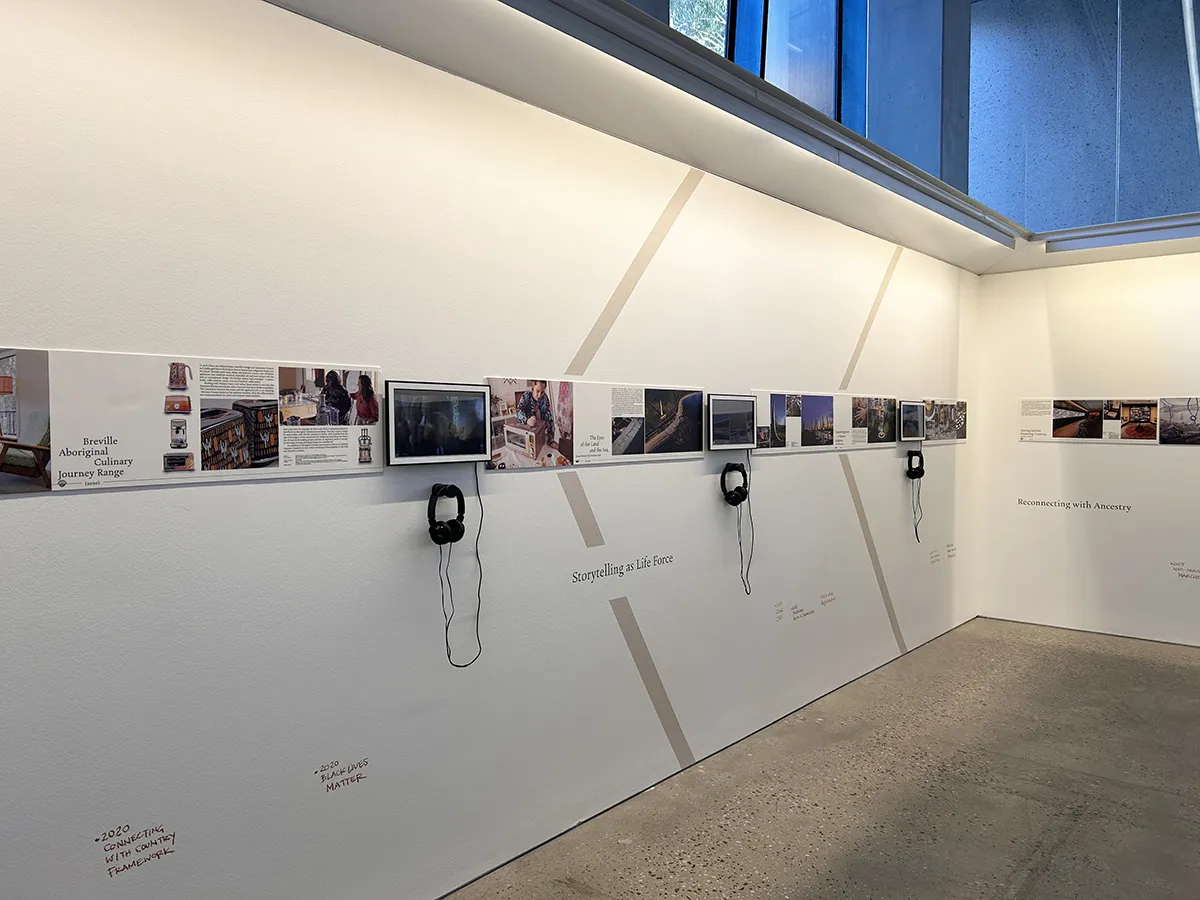
The timeline maps out Alison’s journey from her early years in a coastal suburb of New South Wales to studying interior designs at university. From her early involvement in the Aboriginal Design Unit Merrima to collaborations on large public projects such as the sculpture at Kamay Botany Bay National Prak and the water play area at Sydney Fish Market. These experiences and projects centre around the question: What is Aboriginal Design? Through working with communities, process and collaboration become key element in creating meaningful narratives and cultural depth.
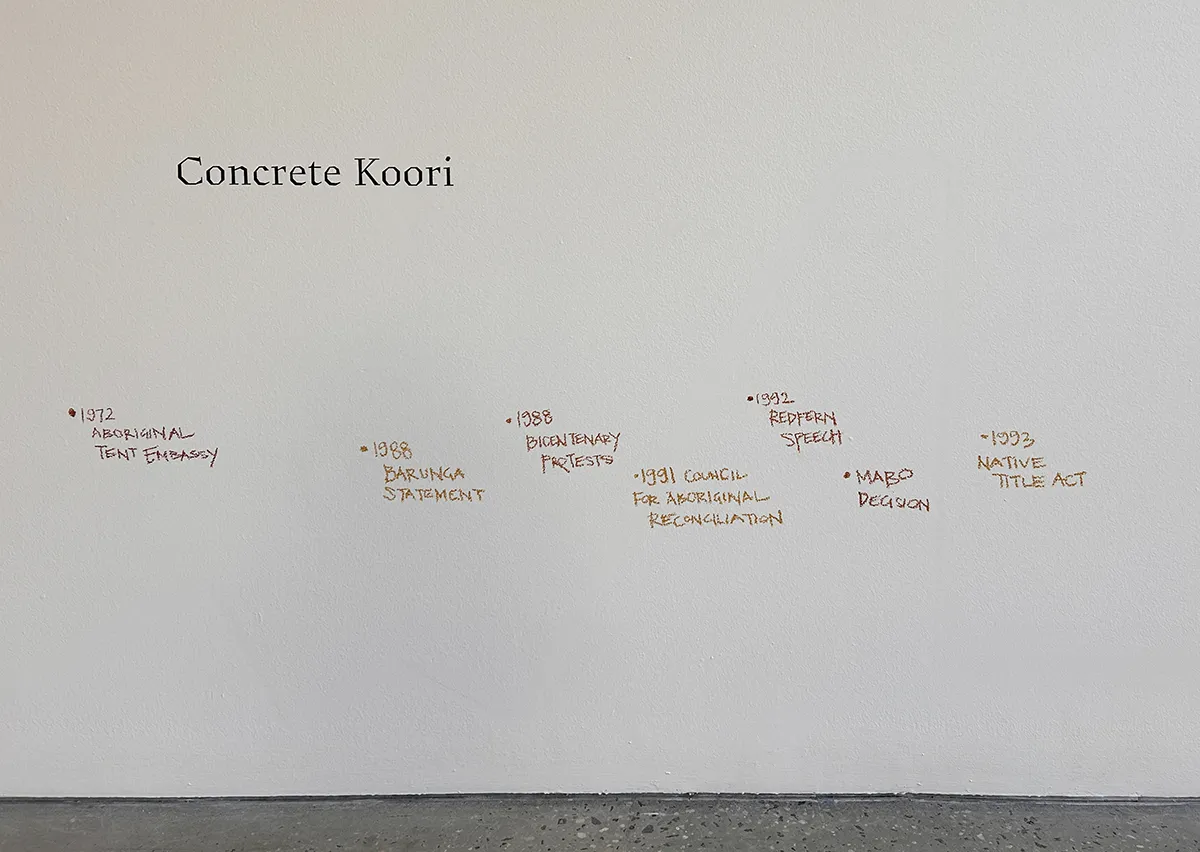
Beneath the timeline, Alison herself marked out significant events in Australian Aboriginal history using an ochre marker: the 1972 Aboriginal Tent Embassy, the 2000 Harbour Bridge Walk, the 2008 Apology to Stolen Generations, the 2023 Voice Referendum, among others. These parallel timelines remind people of the ebb and flow of the world we are living in, encouraging us to stay grounded in our stance and principles.
House of BLAK*
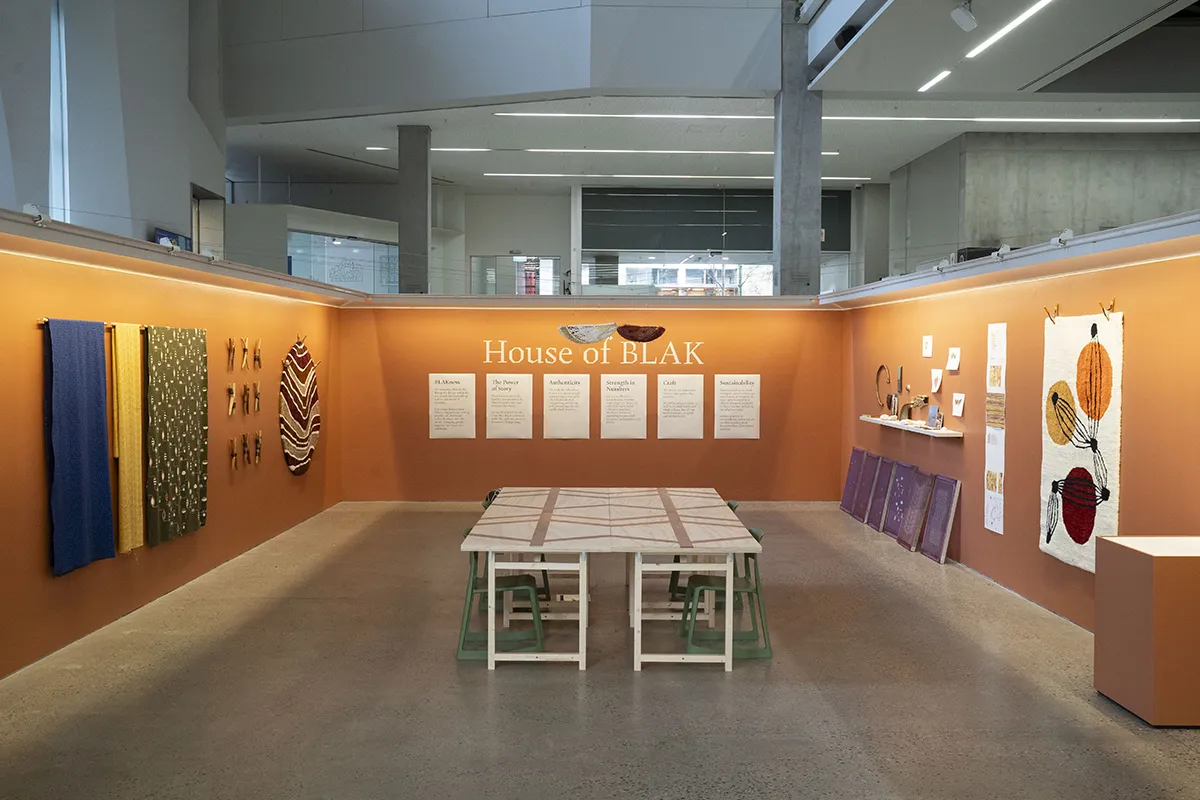
After walking through Alison’s personal and professional journey, the audience will arrive at House of BLAK, a space painted in ochre. A return to Alison’s training background in interior design, where she works with everyday objects like furniture, fabrics, rugs, and lighting.
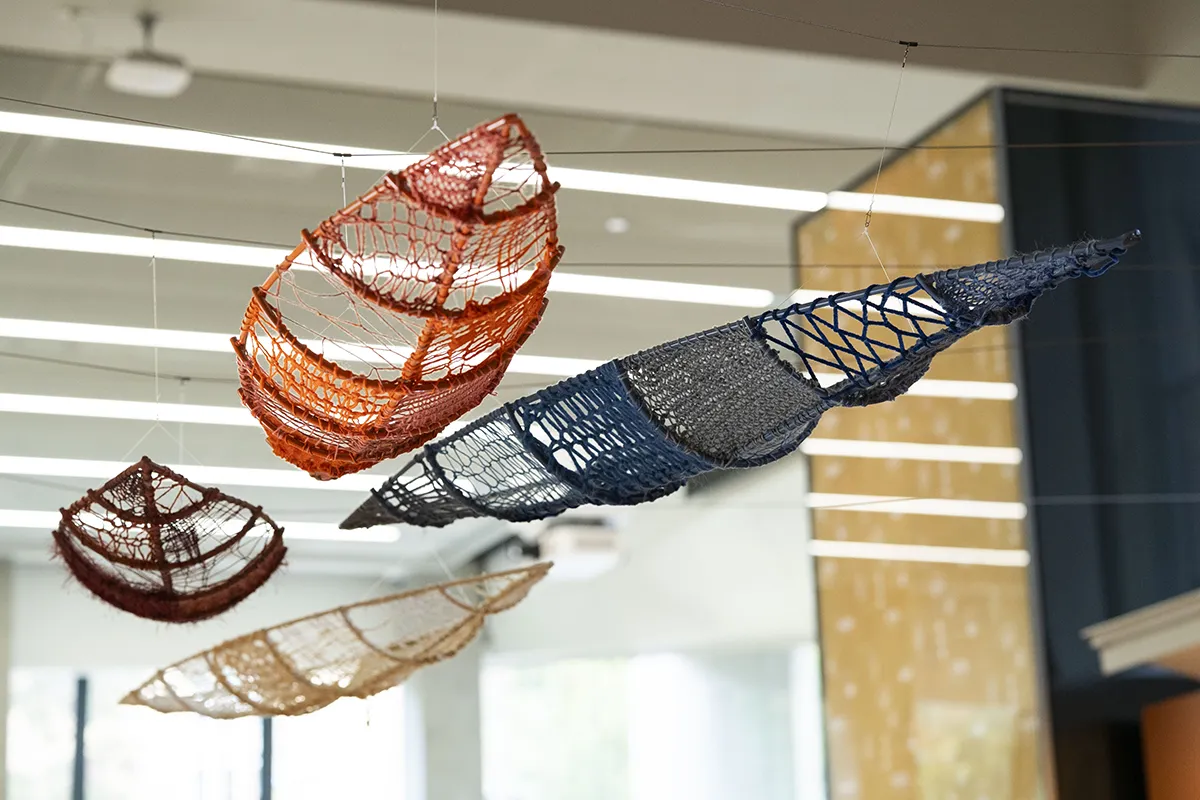
The space features a Whale Table at its centre as a space for gathering and making, with fibre canoes suspended above, created by Alison and Indigenous fibre artist Sancia Janggalay Ridgeway. The artwork reenacts a scene of looking up from the water at fisherwomen in their canoes, paying homage to generations of women’s craftsmanship, bravery, and wisdom.
Alison believes in authenticity in craft and in the effect that material making can have on people. She sees making as an interesting way to approach painful histories that can be difficult for many Australian to discuss in words. The focus is not only the final products but also on the shared process, which helps break down the barriers and creates space to engage with these true histories (“House of BLAK,” 2026).
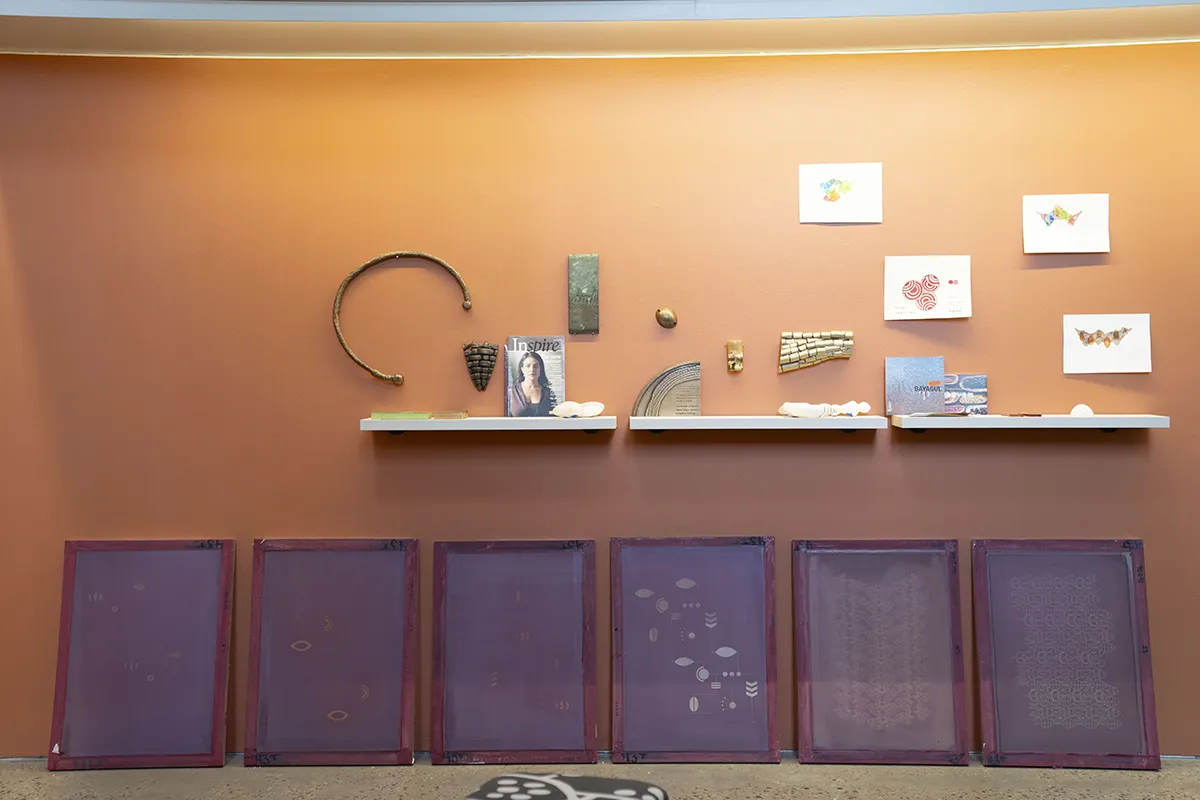
The processes are supported by sketches, material samples, and work-in-progress prototypes.
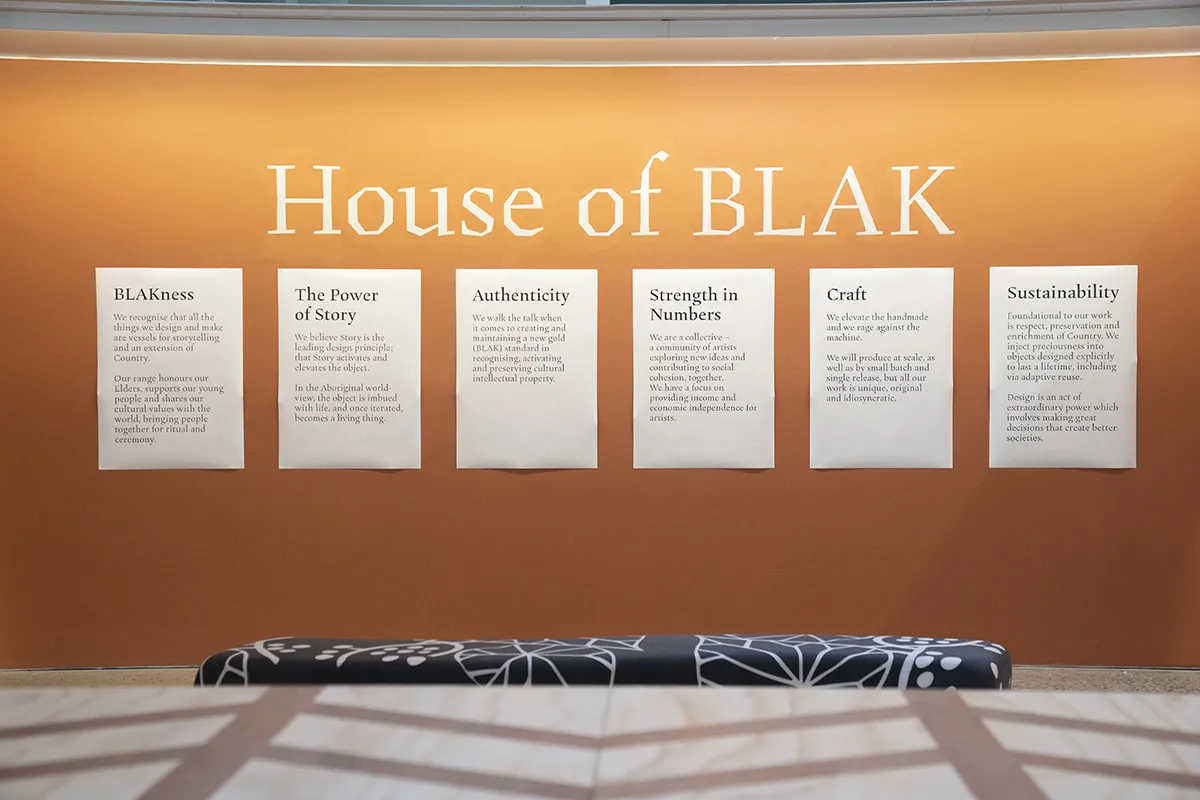
At the centre of House of BLAK is a six-part manifesto installed on the wall. Alison sees the manifesto as a medium for shaping culture and reconnecting to human experience. It is a method of practice and a tool to reclaim agency.
Thinking Through Making
Trained in interior design at the University of Technology Sydney in the late 1990s, Alison believes that now is the best time to be trained as a designer, as the world is going through crises, during which designers shift into a solution-oriented mindset and great things happen. Alison’s practice addresses issues that exist both within Australia and globally: climate change, social justice, racism, creative exploitation, placelessness, materiality and more.
Alison is a hands-on practitioner. She creates changes in people, communities and public spaces. From jewellery to furniture, from sculpture to art festivals, some projects might take time to develop, but they eventually grow into something meaningful.
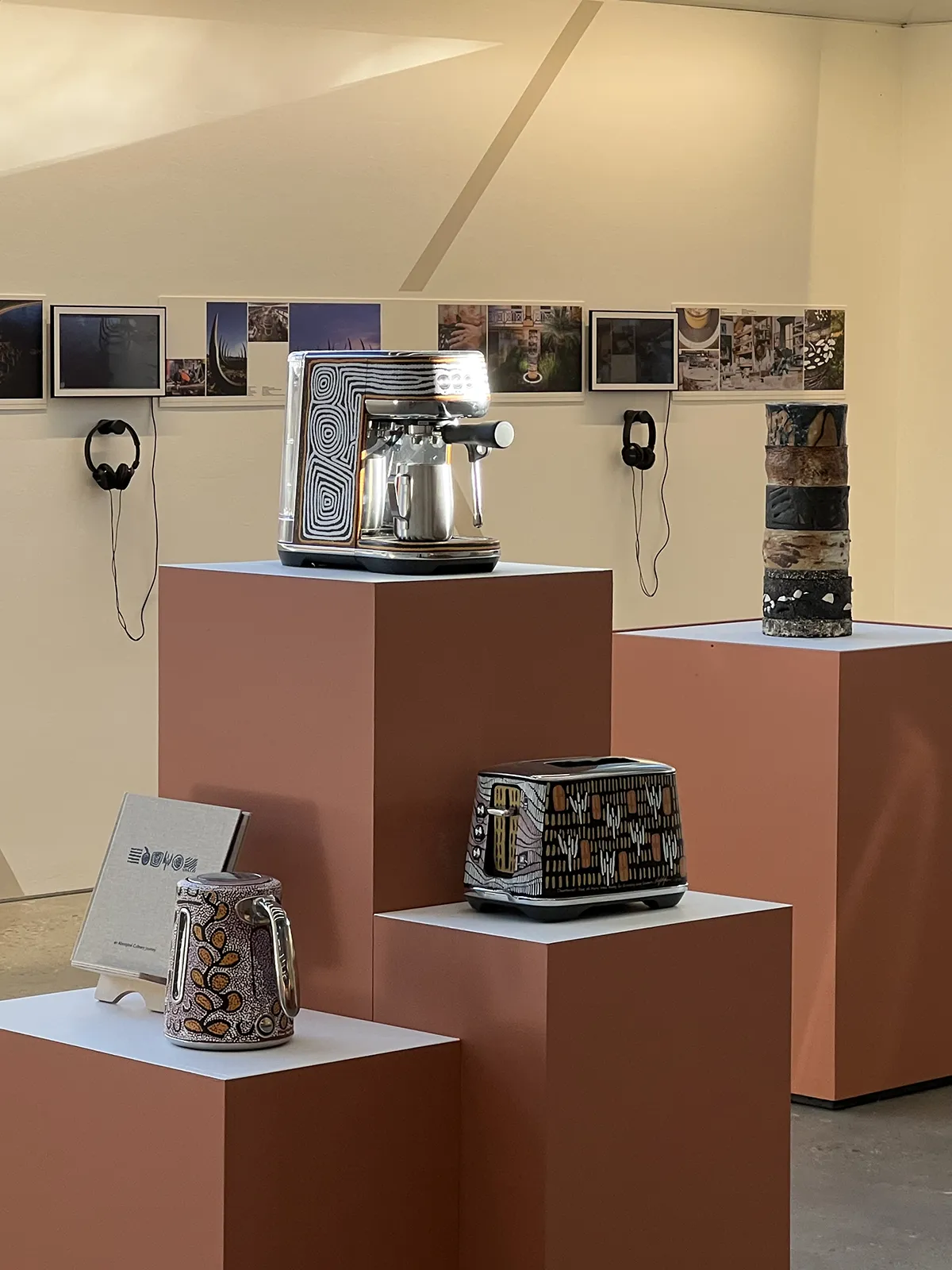
In 2020, after 14 years since the initial proposal, Alison collaborated with Breville on the Aboriginal Culinary Journey collection, creating 6 objects wrapped with Aboriginal artworks: including a kettle depicting women preparing Piruwa tea (made from native shrubs) at Kiwirrkurra (rock holes used for women’s gathering); a toaster painted with Kangaroo grass, a staple food of Aboriginal people. This collection features artists painting directly onto appliances, without reproduction process, with artists receiving royalties for each piece sold. These pieces remain available to purchase.
Belong Through Stories
For Alison, design is a form of storytelling. These stories can be told in different ways, such as film, art, design, and festival programming, which are reflected in Alison’s evolving oeuvre.
Generosity in storytelling builds connections and creates a sense of belongings. Alison’s message is for everyone, not just the Indigenous community (Birks, 2026). In the Bays West Redevelopment in Sydney, Alison draws attention to the white seahorse in the bay and addresses it as part of the design agenda: “what if this place (Balmain) becomes a seahorse place, and people living in this area are invited to be the seahorse people, caring for the seahorses? (Page, 2026)” The built environment is an extension of Country, an Indigenous interpretation of a network of knowledge and stories. Through this project, Indigenous knowledge systems are revitalised within contemporary planning processes.
“We can design our built environment to be a part of the managed landscapes that formed the basis of First Nations ecology since time immemorial. Our objects, interiors and places can be an extension of the Songlines that crisscross this country in every direction and are a web of knowledge embedded in our everyday life.” (Page, 2021)
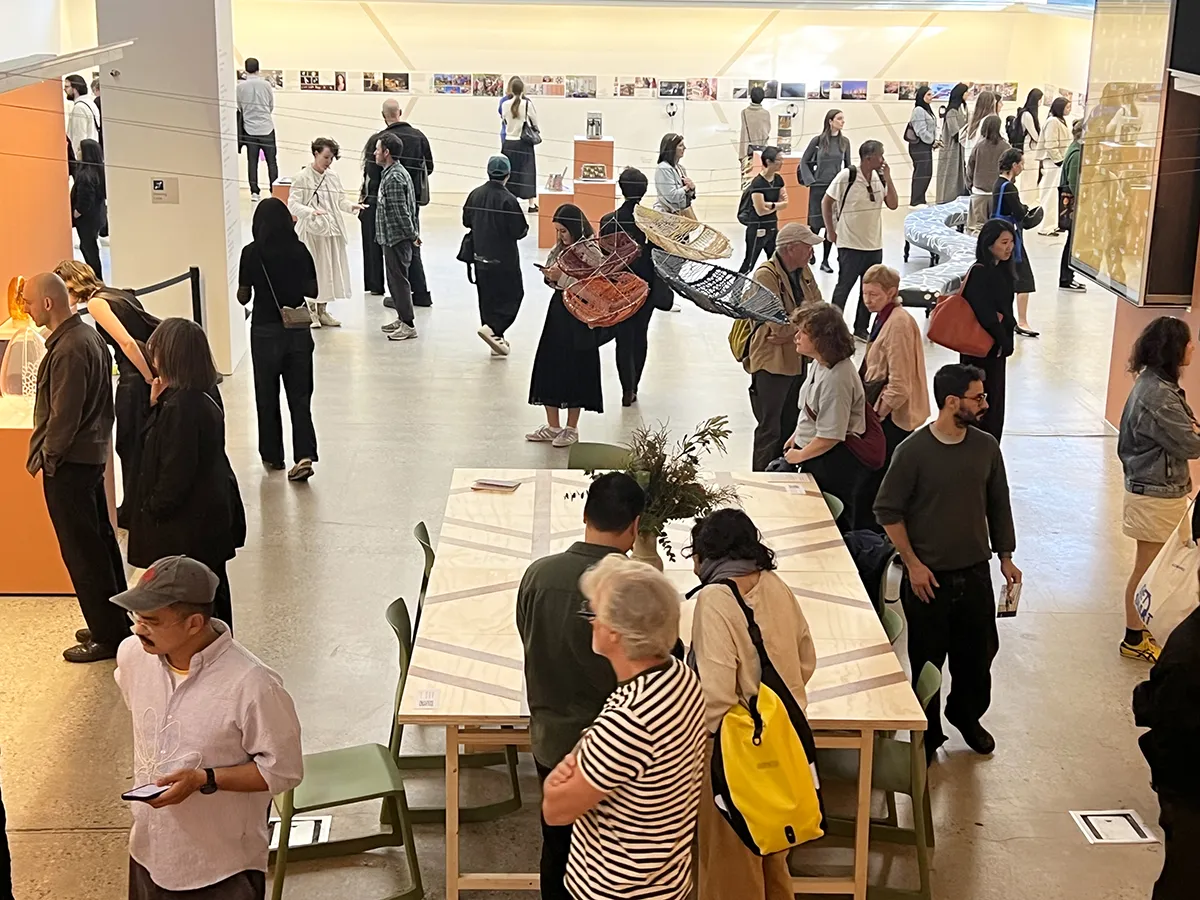
The exhibition takes an honest curatorial approach and centres Alison’s stories as its focus. It shows that the power of design is already in motion, situated within a broader cultural movement, although there is still a long way to go. In this precarious present and future, Alison and this exhibition offer us something to hope for.
*BLAK is a term created by Destiny Deacon (1956-2024), an Australian Aboriginal artist of the Erub, MER & K’ua K’ua people, in 1994. It was a reclamation of Indigenous identity and a form of resistance. (Blak Lik Her: Remembering Destiny Deacon, 2024)
Alison Page: Creative Shape Shifter on view at the Melbourne School of Design from 16 May – 1 July 2026. This exhibition is also part of the Melbourne Design Week 2026. The exhibition is curated by Alison Page and Associate Professor Jillian Walliss.
Article by Terren Shi
Reference
Birks, Georgia. 2026. Design Speaks Weekly. “Who benefits from Indigenous design? | Alison Page.” May 11. Architecture Media. Podcast, 24 min. https://open.spotify.com/episode/71XXTCNE6Sg2NGEJTzhBSv?si=a497c11a49184e60
“Blak Lik Her: Remembering Destiny Deacon.” 2024. National Gallery of Vitoria. Accessed 21 May. https://www.ngv.vic.gov.au/exhibition/blak-lik-her/
“House of BLAK.” 2026. Produced for exhibition Alison Page: Creative Shape Shifter. Video, 10:01.
Page, Alison. 2026. “BLAK: Defining an Australian Design Future.” Lecture, University of Melbourne. Parkville VIC, May 16. Part of Melbourne Design Week 2026 program.
Page, Alison and Paul Memmott. 2021. In DESIGN Building on Country, edited by Margo Neale. Thames & Hudson.