
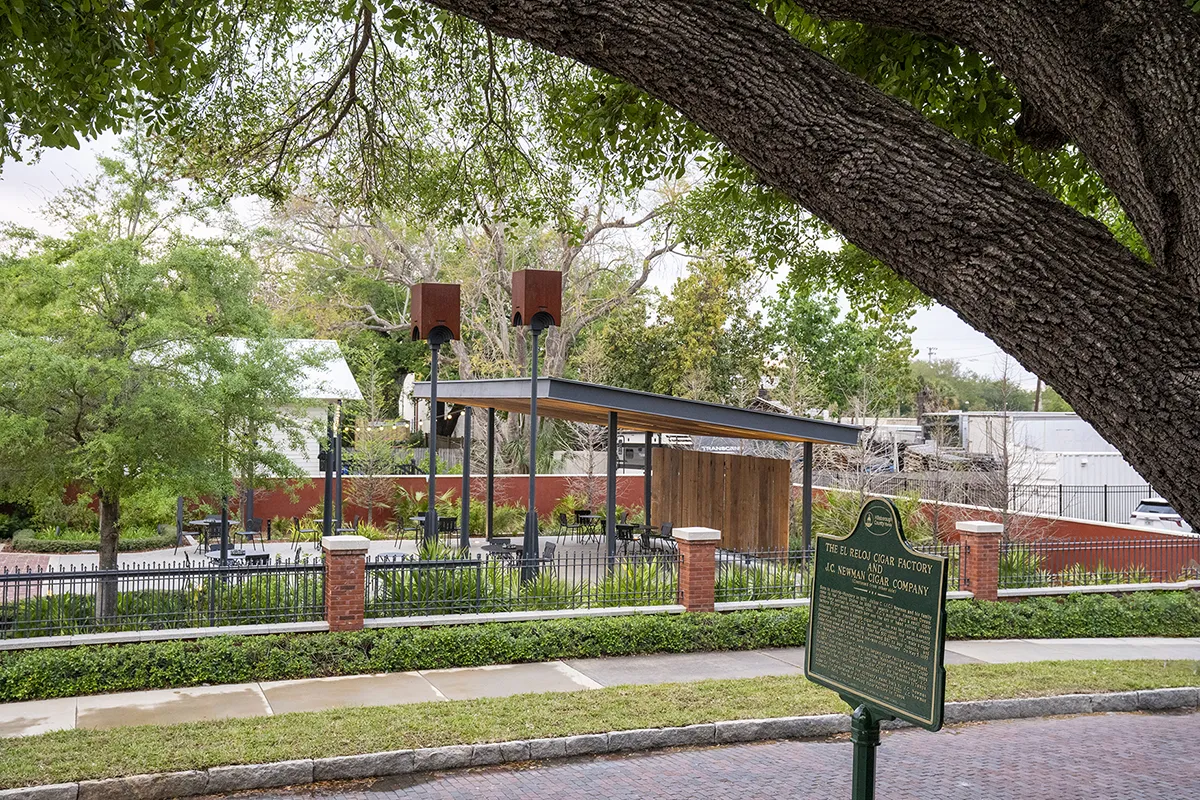
Cigar Workers Park is a 10,000-square-foot (930 sq. m) urban park in Tampa’s Ybor City Historic District designed by Conner Landscape Architects for J.C. Newman Cigar Company. Located across from the historic El Reloj cigar factory, the project transforms a formerly vacant parcel into a public-facing landscape that extends the factory campus into the civic life of the neighborhood.
The park is rooted in the history of Ybor City, where cigar production shaped Tampa’s identity as Cigar City. J.C. Newman Cigar Company, the oldest family-owned premium cigar manufacturer in the United States, remains closely tied to that legacy through El Reloj, its historic clock-tower factory. Cigar Workers Park was developed to strengthen the relationship between the factory, its visitors, its employees, and the surrounding community.
The project honors the generations of cigar workers whose labor made Tampa internationally known for cigar production. The name of the park is direct and intentional. Rather than treating the site as an ornamental forecourt, the design gives form to a broader cultural history through space, material, public access, and daily use.
Before its transformation, the site functioned as an underused parcel across from the factory. Its redesign creates a civic edge for the El Reloj campus and introduces a gathering space within a historic district with limited green space. Although privately owned, Cigar Workers Park is open to the public and serves visitors, neighbors, employees, and the surrounding community.
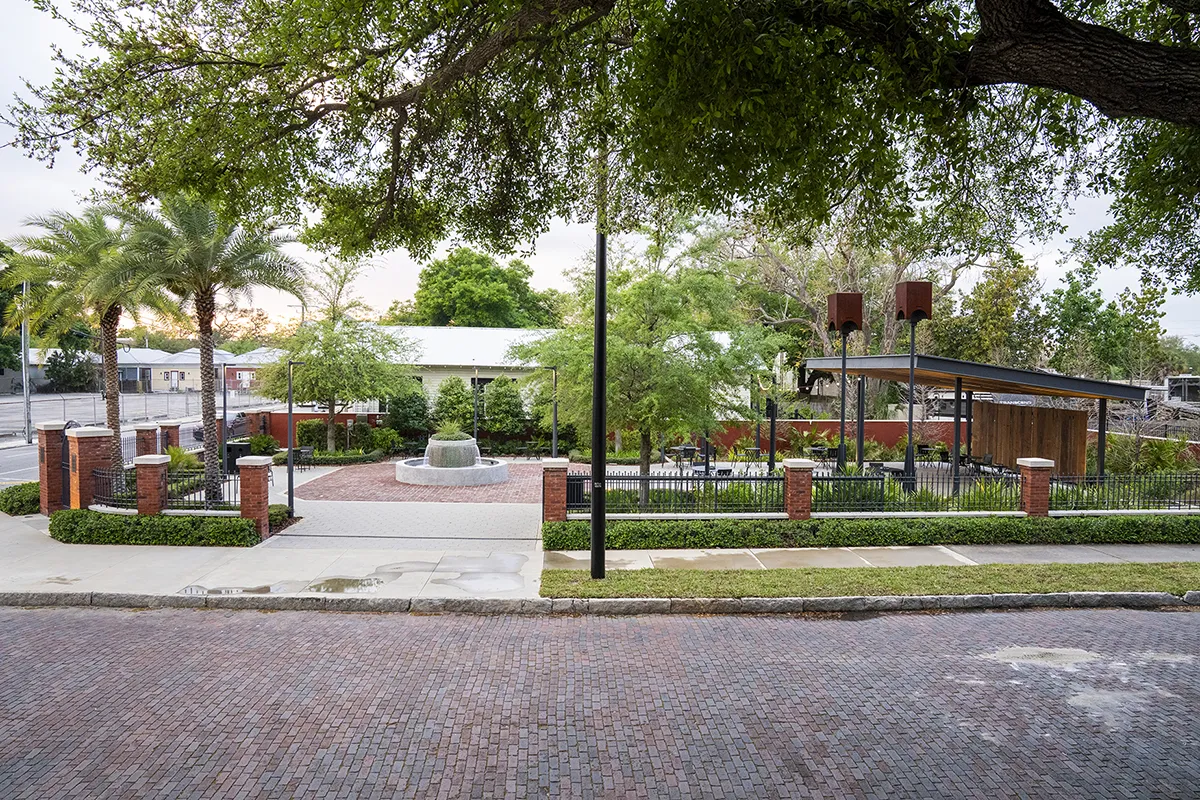
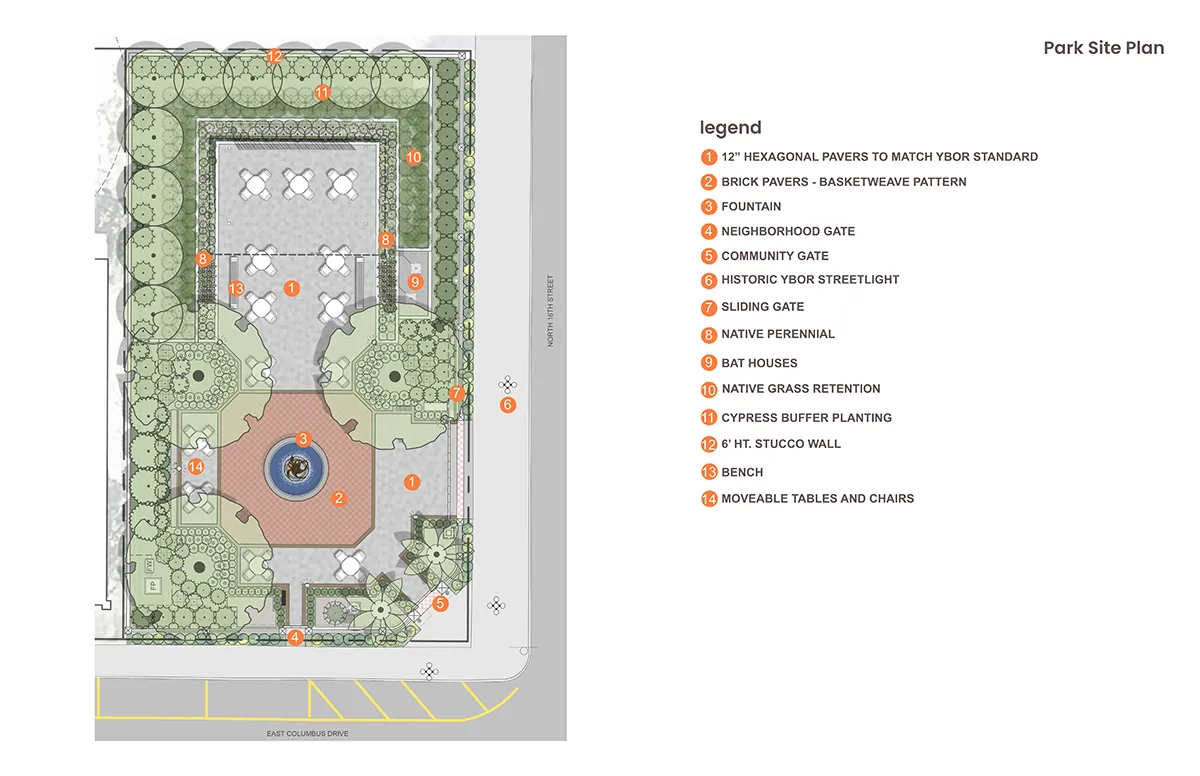
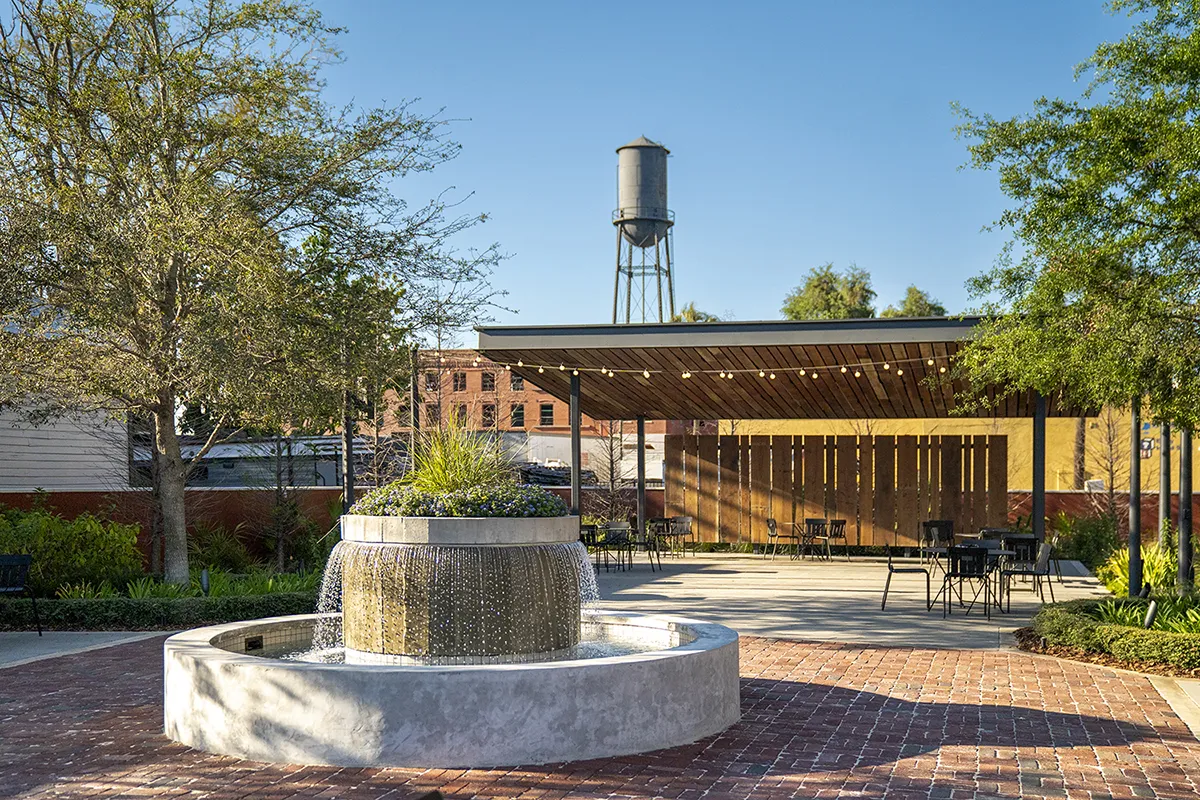
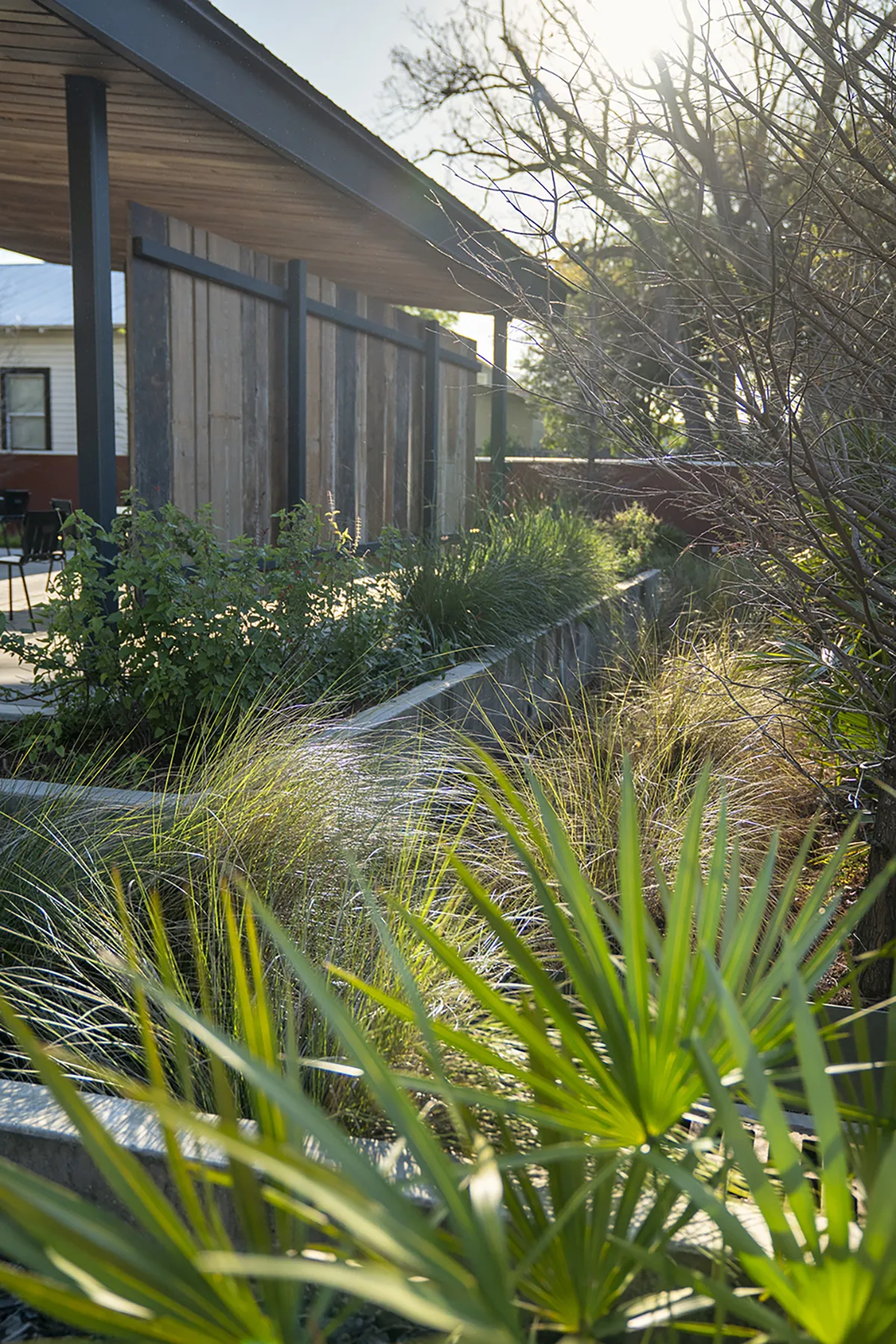
The design organizes the compact parcel into a sequence of outdoor spaces. A central gathering area provides flexibility for informal use, community events, and small gatherings. A shaded pavilion establishes a protected outdoor room within the park, while a central fountain introduces sound, movement, and a cooling presence suited to Tampa’s climate. Circulation is shaped through transitions in paving, planting, and spatial enclosure, allowing the park to operate as both a neighborhood space and an extension of the factory campus.
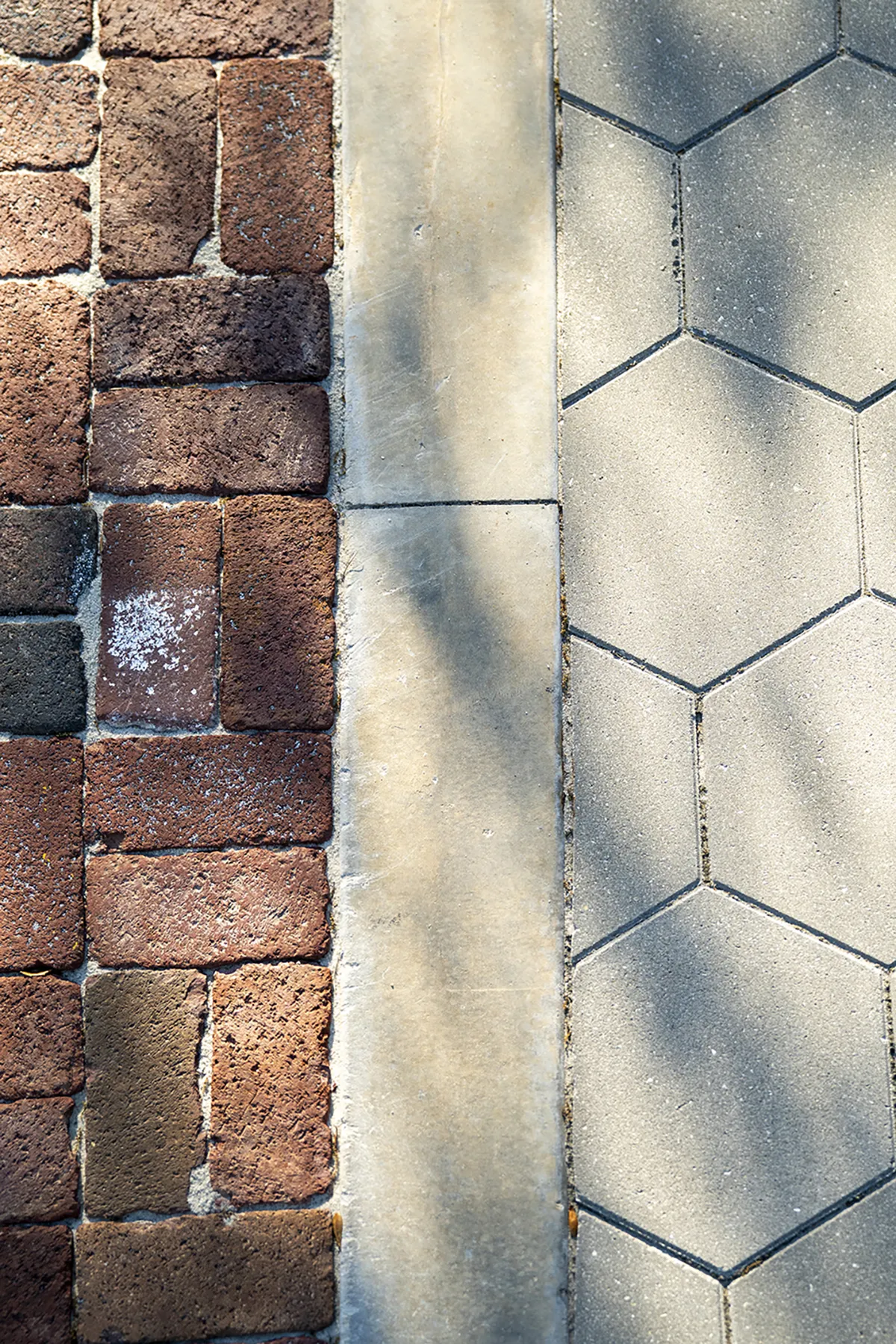
Material continuity is central to the project. Historic Tampa brick and Ybor-style hexagonal pavers connect the new landscape to the streetscape language of the surrounding district. Salvaged tobacco barn wood is incorporated into the pavilion and fountain, linking the park to the agricultural origins of cigar production and the curing process that precedes cigar making. These materials ground the project in the industrial and agricultural history of the place while giving the park a tactile and durable character.
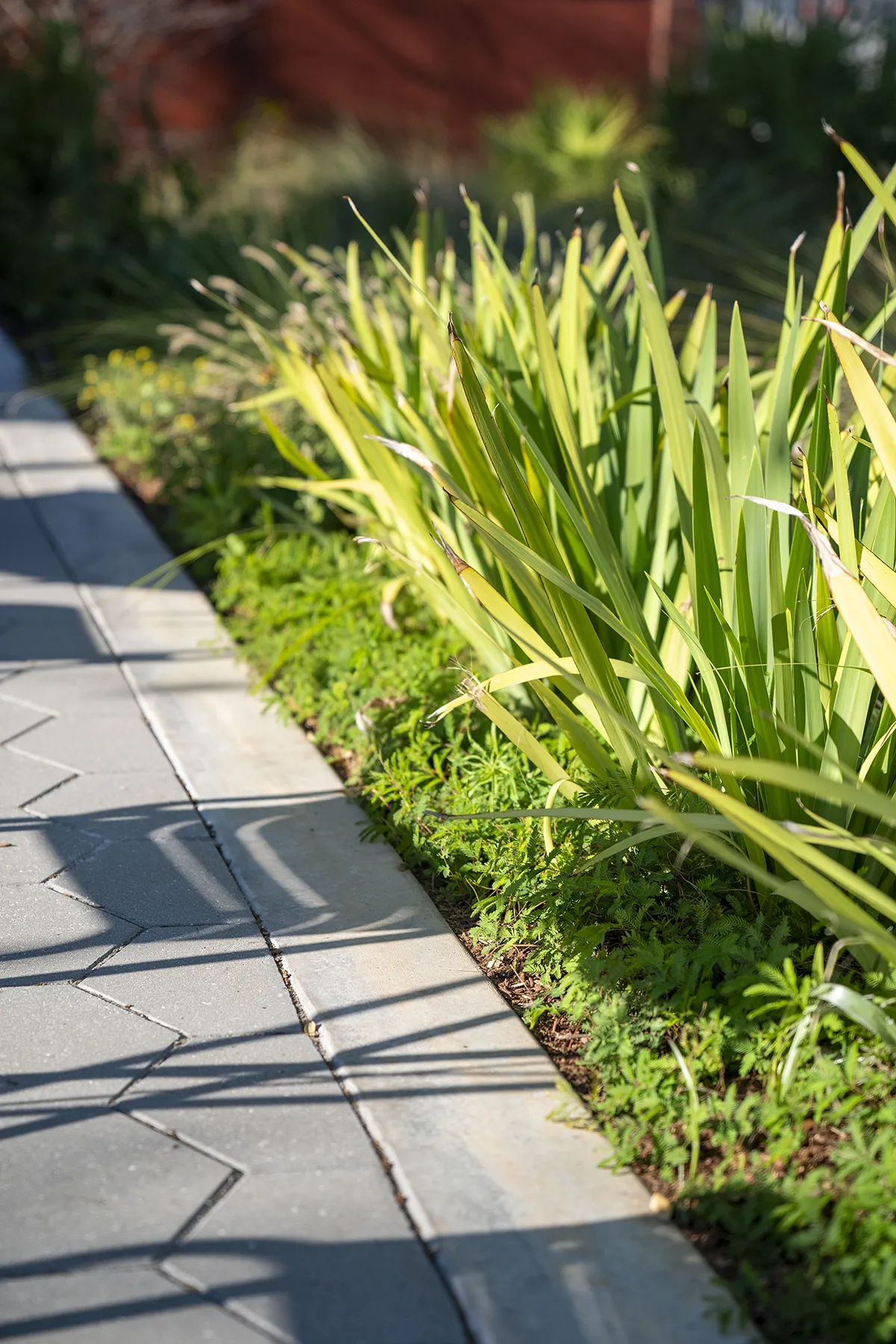
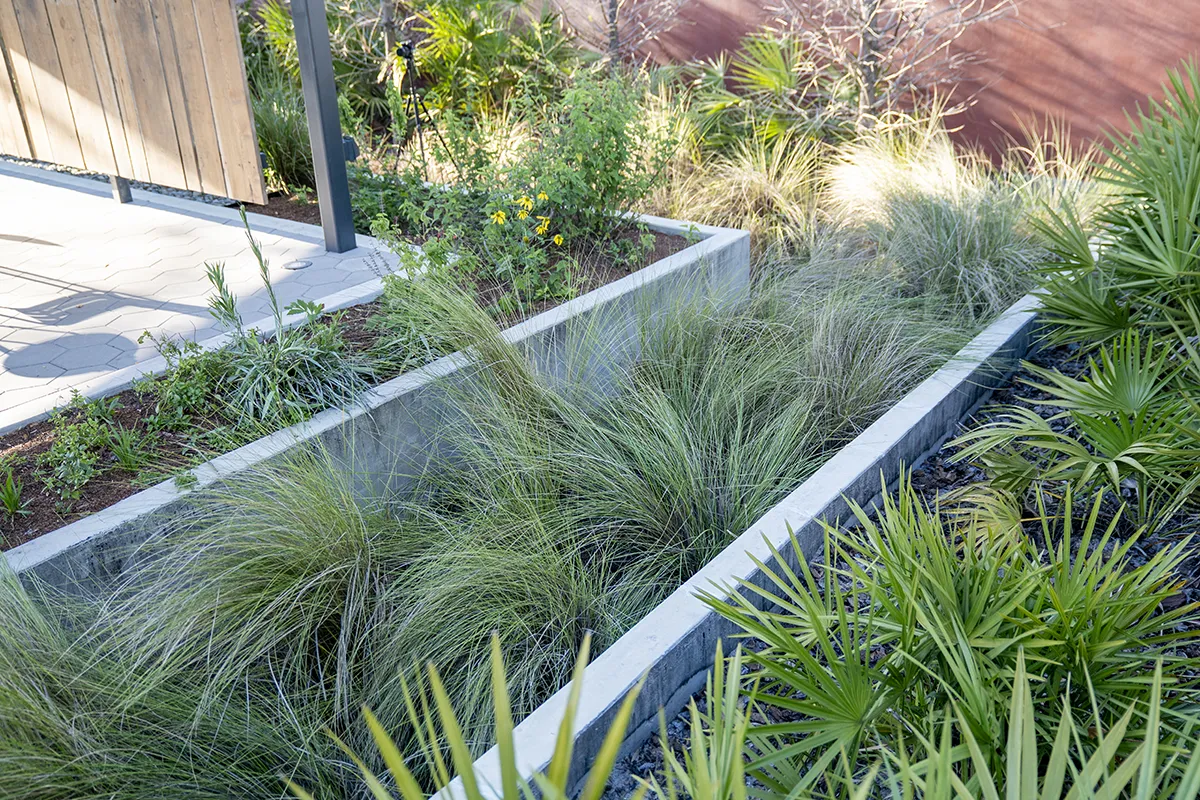
The planting and stormwater strategy adds an ecological layer to the cultural landscape. Native planting, bio-retention areas, pollinator habitat, and stormwater planting are integrated into the organization of the park. These systems soften the urban parcel, help manage runoff, and support birds, bees, butterflies, and other beneficial species. The planting strategy gives the park seasonal texture while contributing to its environmental performance.
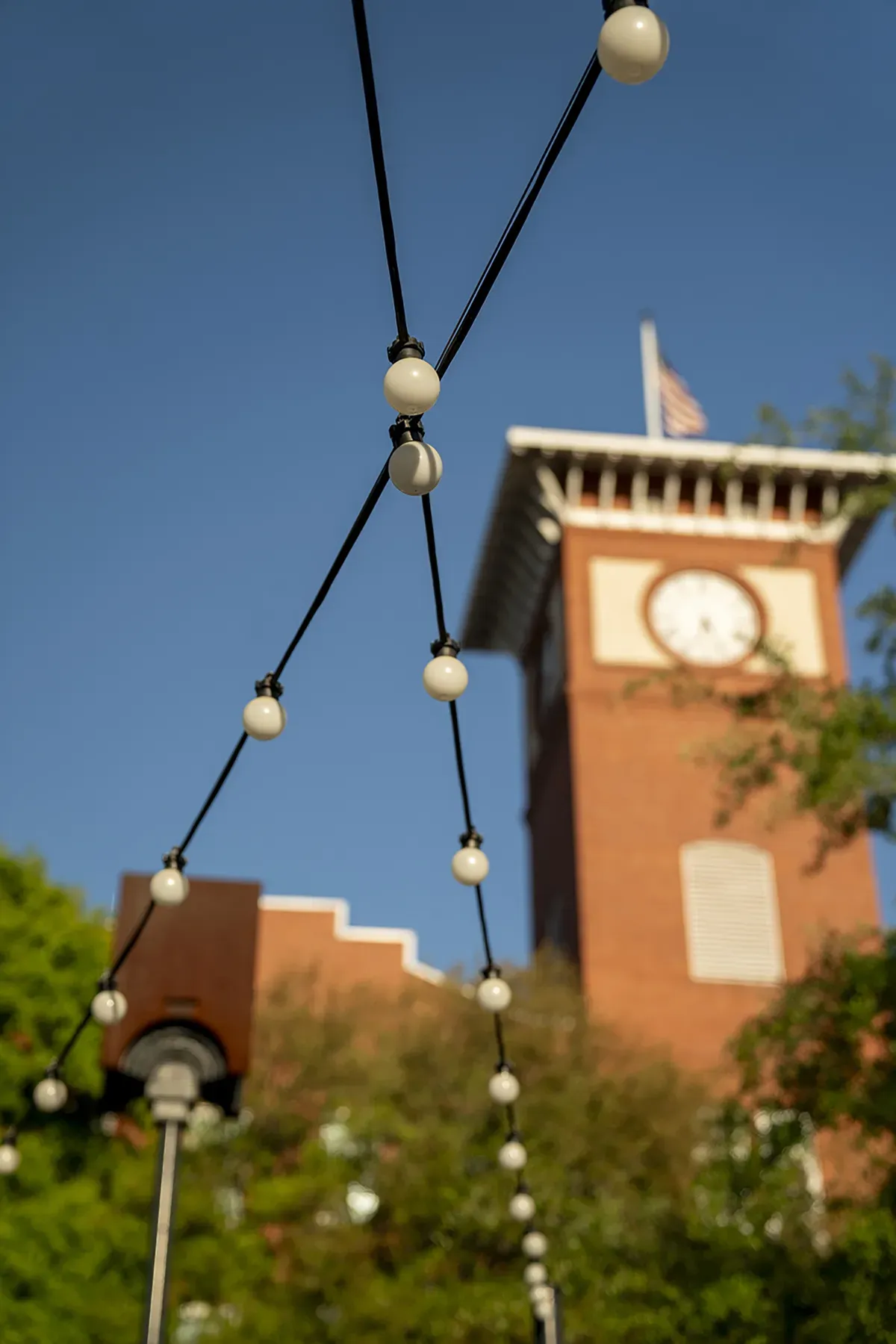
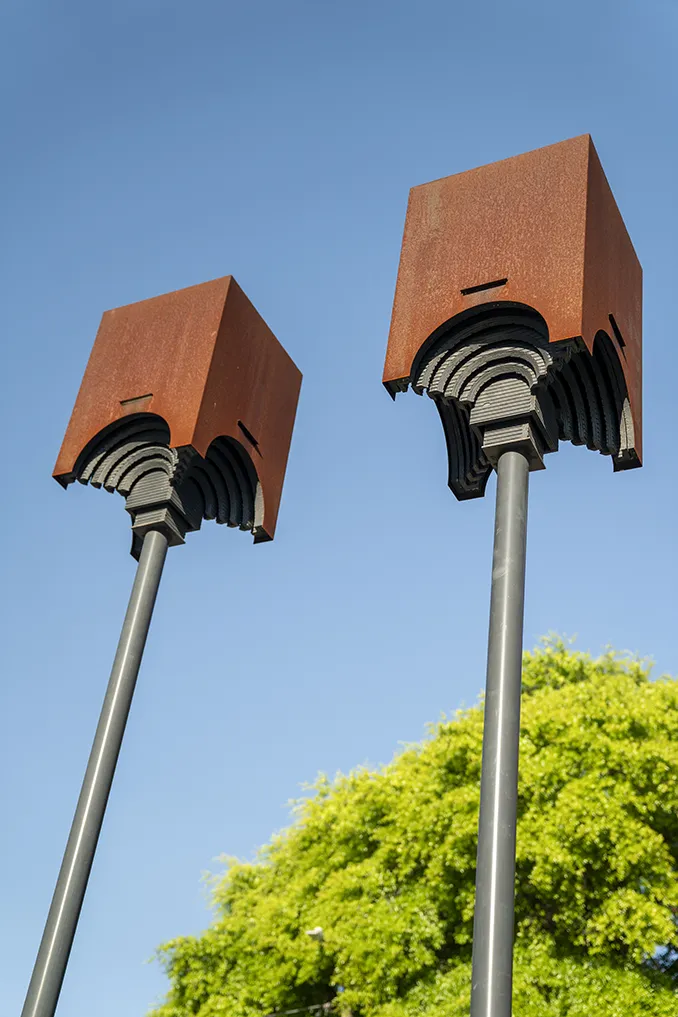
One of the project’s most distinctive elements is a pair of sculptural bat houses designed to support a relocated bat colony on the J.C. Newman campus. The bat houses reference the form of the El Reloj clock tower, connecting habitat infrastructure to the factory’s architecture and identity. In this way, ecological function becomes part of the site’s visual and spatial language rather than a separate technical layer.
Cigar Workers Park demonstrates how a small urban landscape can carry multiple forms of value at once. It functions as a public space, a cultural landscape, an ecological infrastructure, and a material extension of a historic working factory. Through its design, the project connects labor history, public access, stormwater management, native planting, habitat creation, and local material reuse within a compact civic landscape.
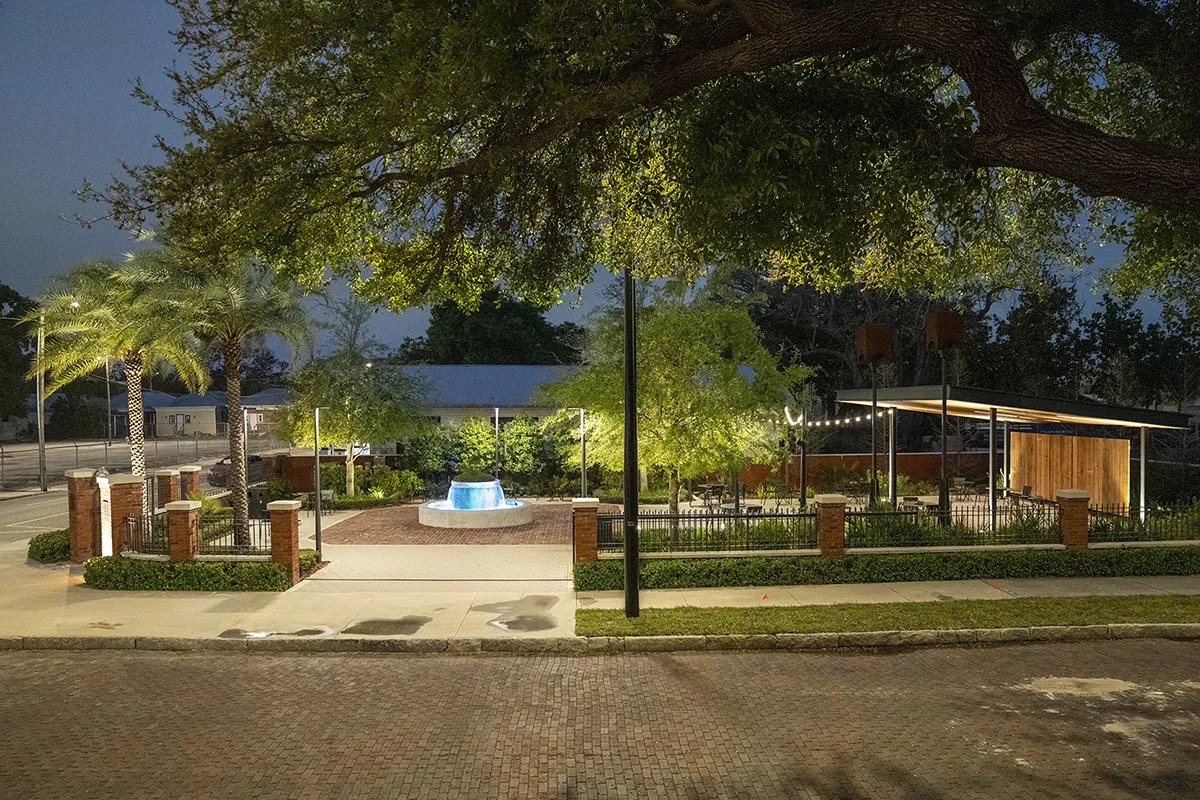
The result is a park that preserves history by making it active. The legacy of El Reloj and Tampa’s cigar workers is not contained only within the factory walls. It is extended into the daily experience of the neighborhood through shade, gathering, water, planting, paving, and public life.
Cigar Workers Park
Landscape Architect: Conner Landscape Architects
Client: J.C. Newman Cigar Company
Architect: ROWE Architects
Consultants: Native Engineering, Matrix Engineering, Specialized Services Group
Photography: Michael Todoran, HAPS Agency