
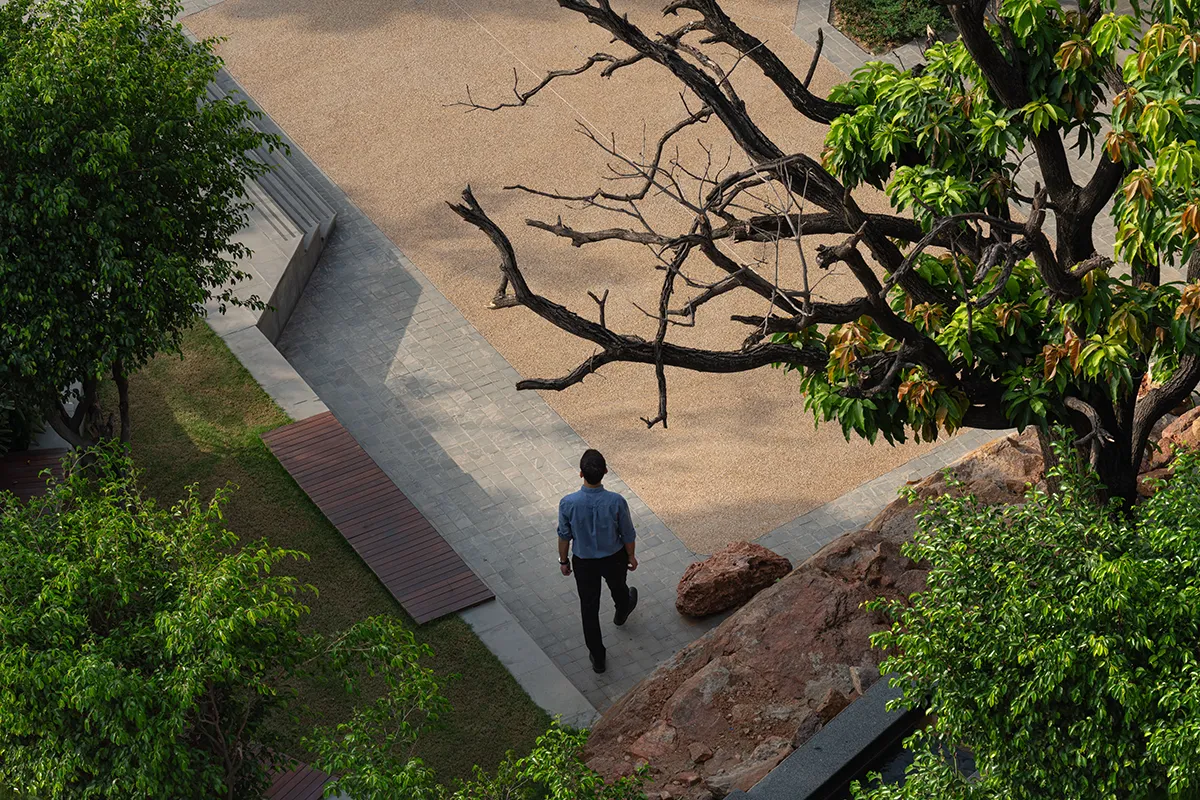
The American Embassy School’s landscape design is a direct response to New Delhi’s unique urban and cultural identity, intentionally crafted for learning, play, and collaboration. The project is not just a functional space, but a homage to the architectural legacy of Joseph Allen Stein, who originally designed the school. By drawing inspiration from Stein’s sensitive use of materials and proportion, the design integrates with the campus’s original character while creating new, adaptable outdoor areas near the workshops and cafeteria.
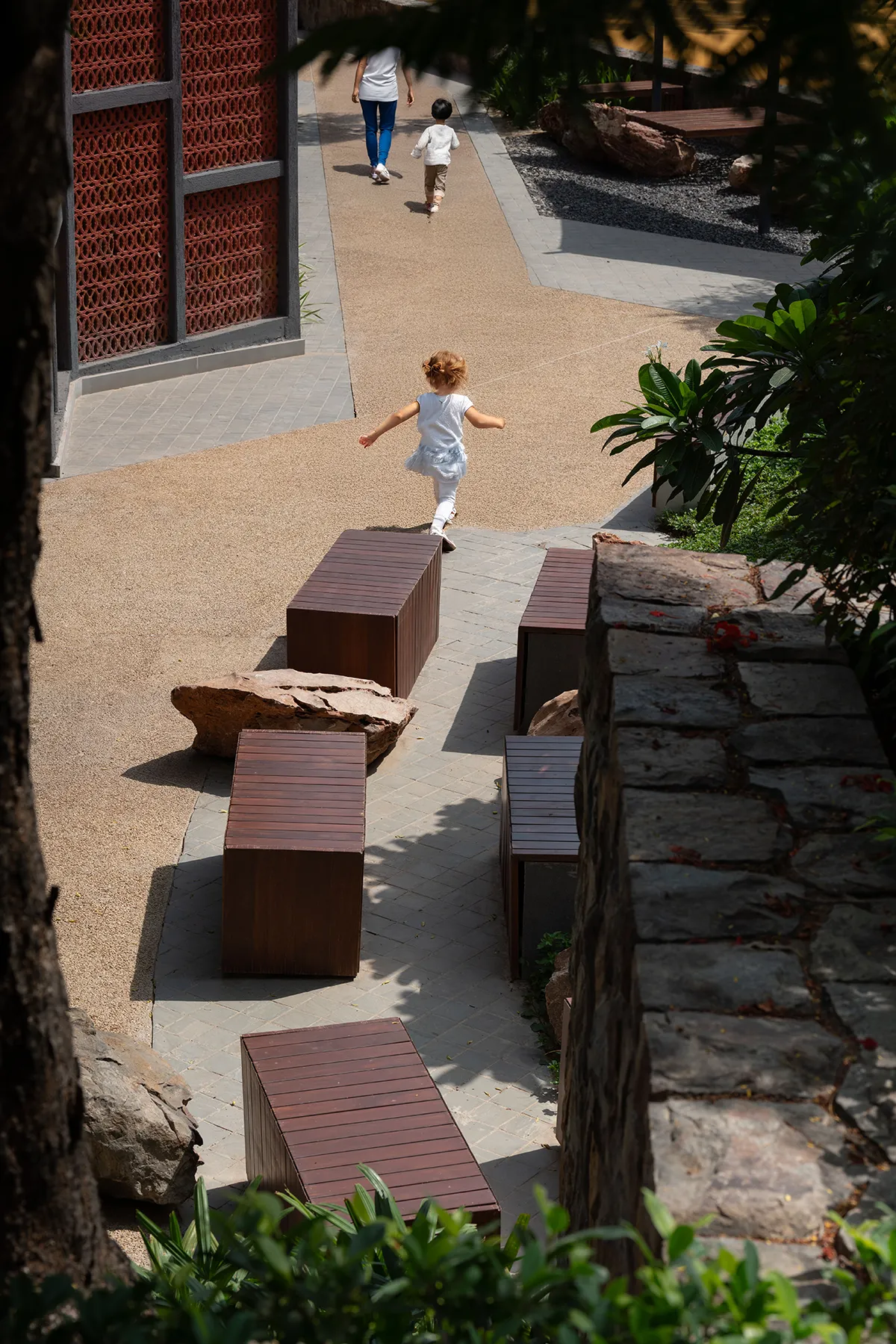
Overlapped benches and tiered, stepped seating create flexible zones for demonstrations, group discussions, and social interaction. The circulation paths act as a connective spine, linking the workshops, play area, and cafeteria into a cohesive whole. These paths are part of a broader walking loop that naturally binds the campus together. Functional overlays have been created to make the most of every square foot. For example, a single area can serve as both an outdoor discussion zone and an extension of the play area, with shifting visual connections that adapt to its use. These “breathing spaces” offer a retreat from the classroom, promoting reflection and conversation. Based on a detailed site analysis of foot traffic and peak usage times, the strategic placement of functional zones and material selections ensures a thoughtful use of space.

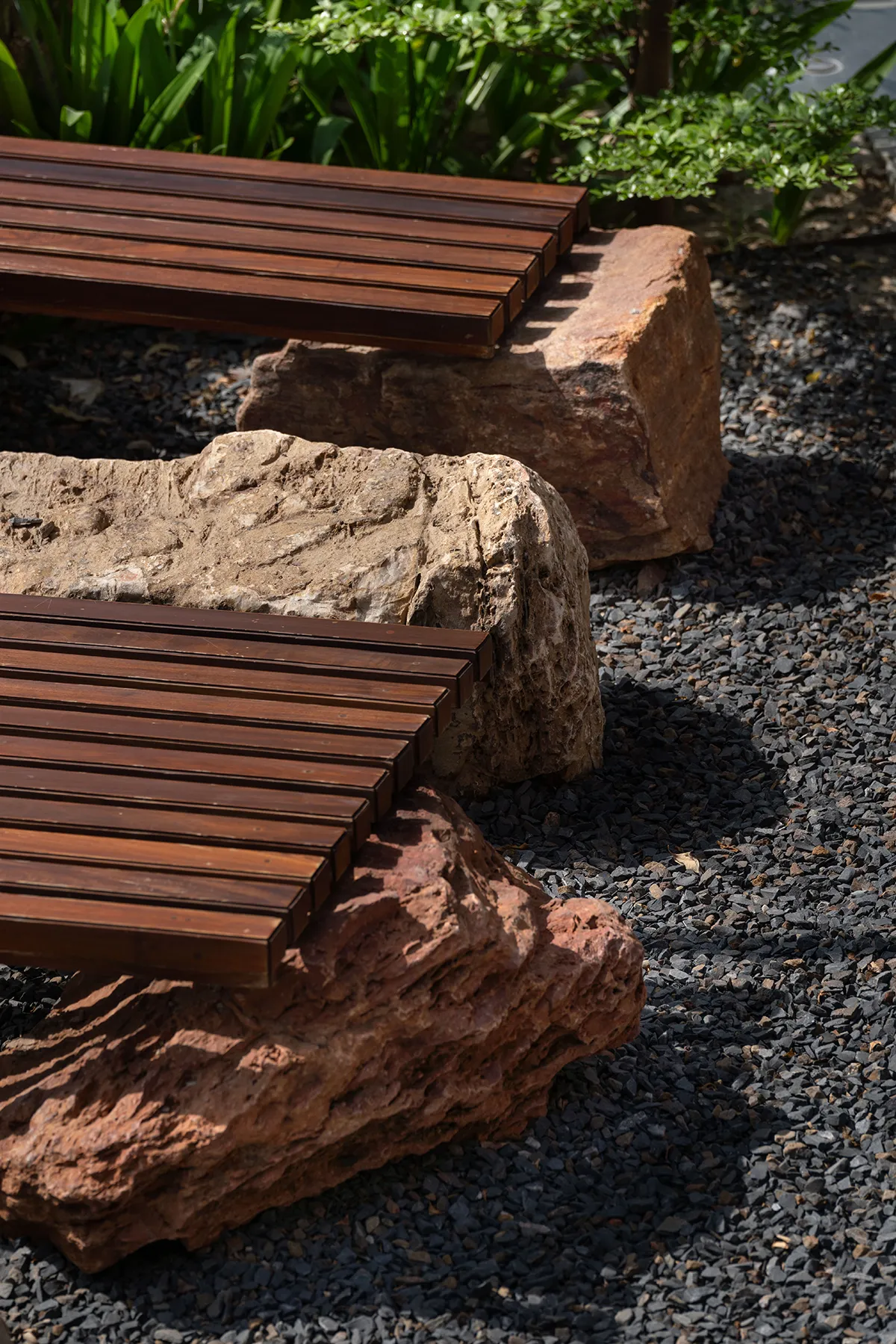
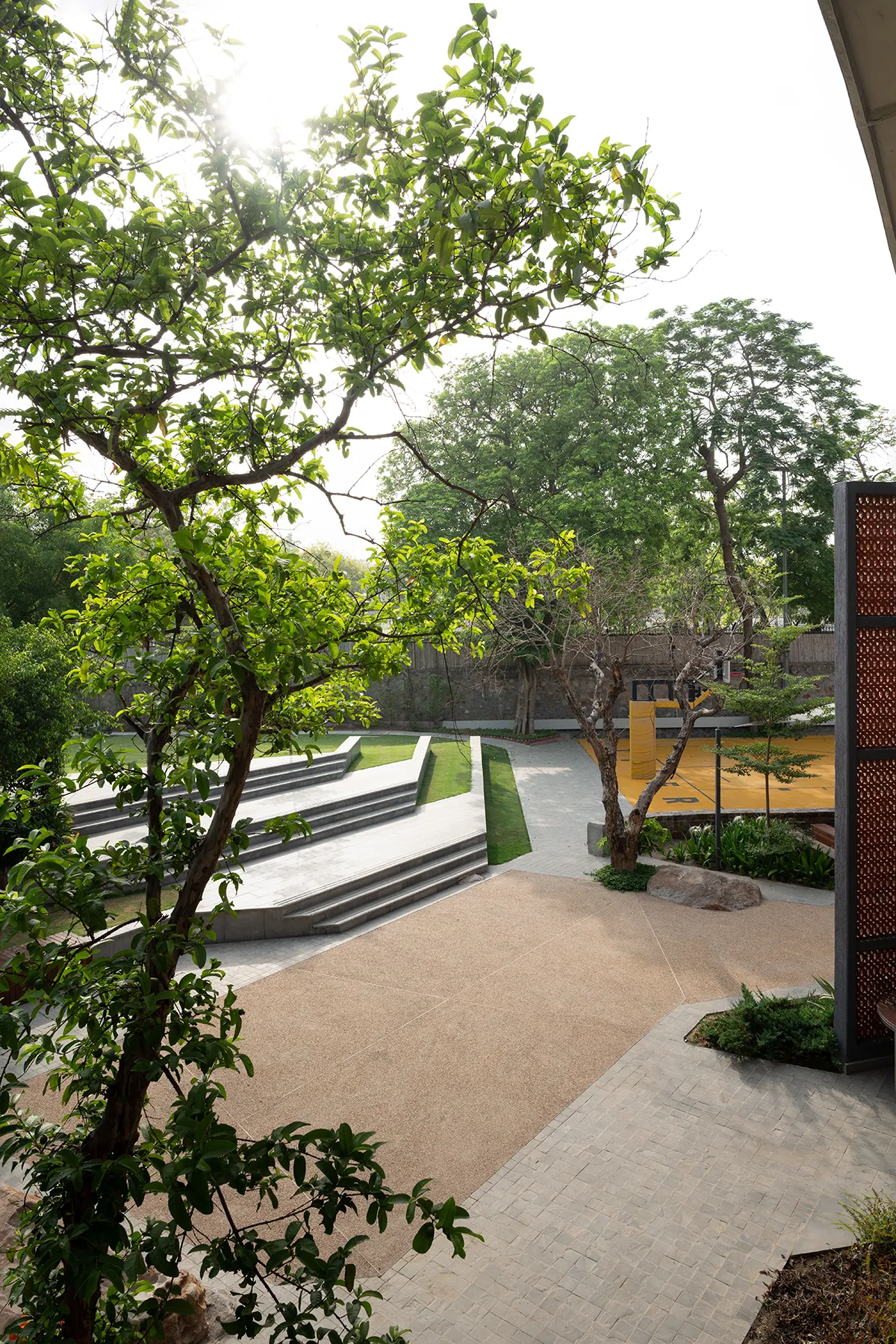
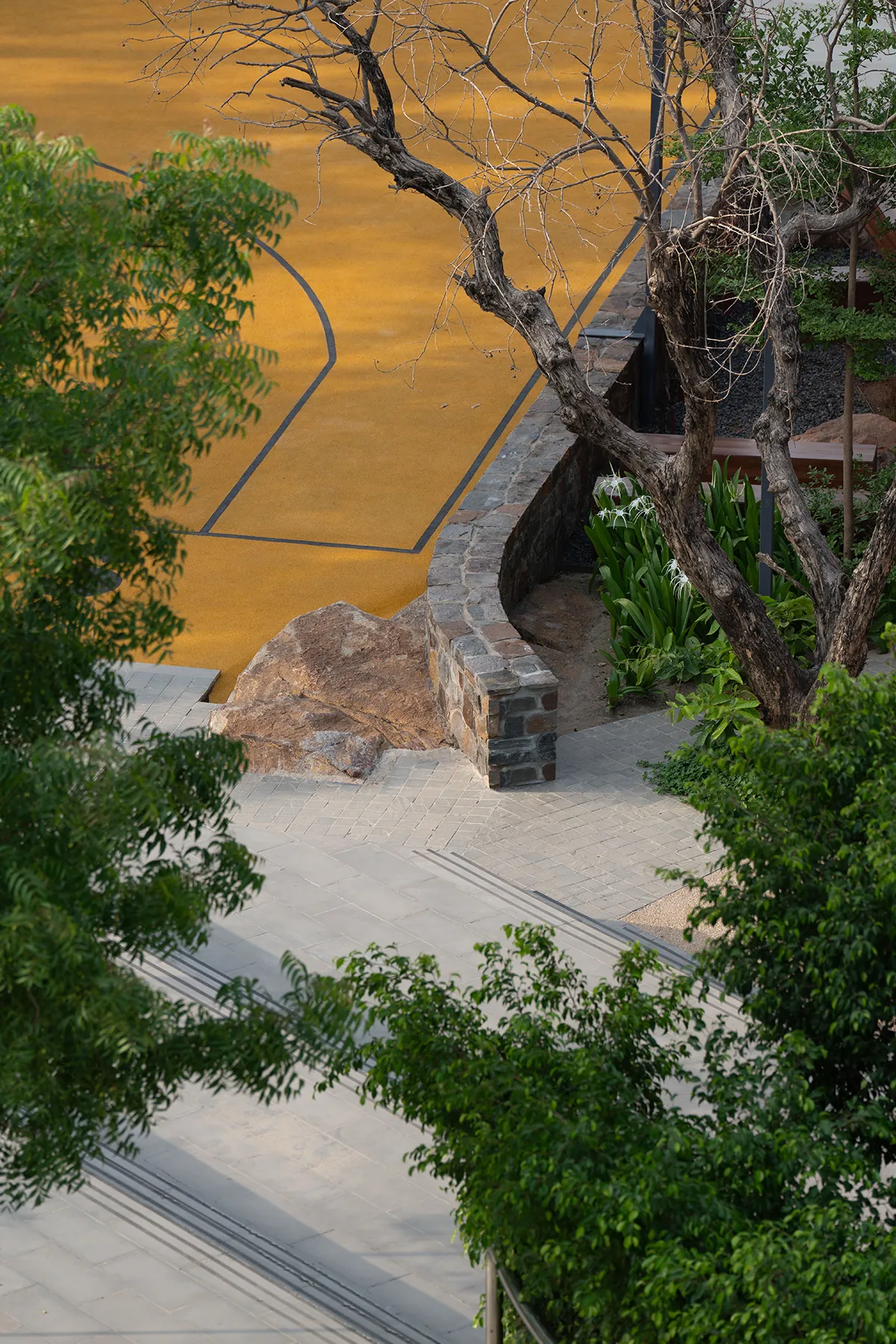
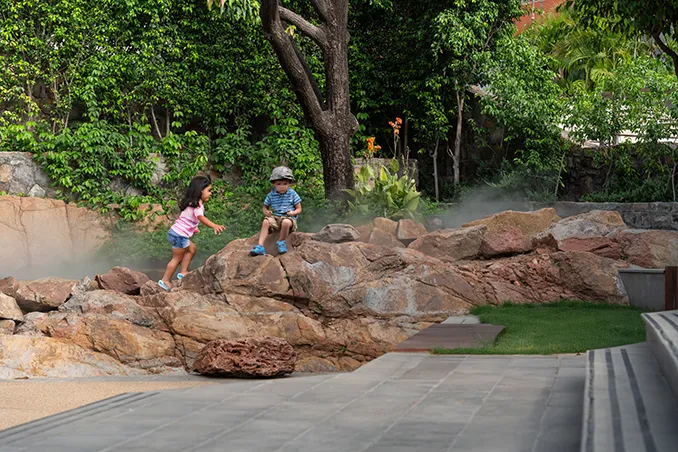
The design celebrates ecology by drawing inspiration from the dry scrub ecosystem of Delhi Ridge, introducing a native, adaptive planting palette. The increase in softscape improves permeability, allowing rainwater to recharge the ground and supporting the resurgence of native flora and fauna. The compelling integration of the water feature and rock seating is a highlight of the design. The concept began by celebrating the site’s existing rock outcrops, which naturally lent themselves to tiered seating. A misting system was then introduced, creating a cool microclimate and a sensory experience enriched by the scent of fragrant plants. This serves as a crucial ecological function by enhancing groundwater recharge and providing evaporative cooling. The sound of the cascading waterfall, carefully calibrated to a calming decibel level, and the diverse textures of natural rock, slate, and plant life all work together to create a sensory anchor that captures the essence of the Delhi Ridge. These efforts have successfully attracted indigenous birds, reinforcing the project’s ecological ethos.
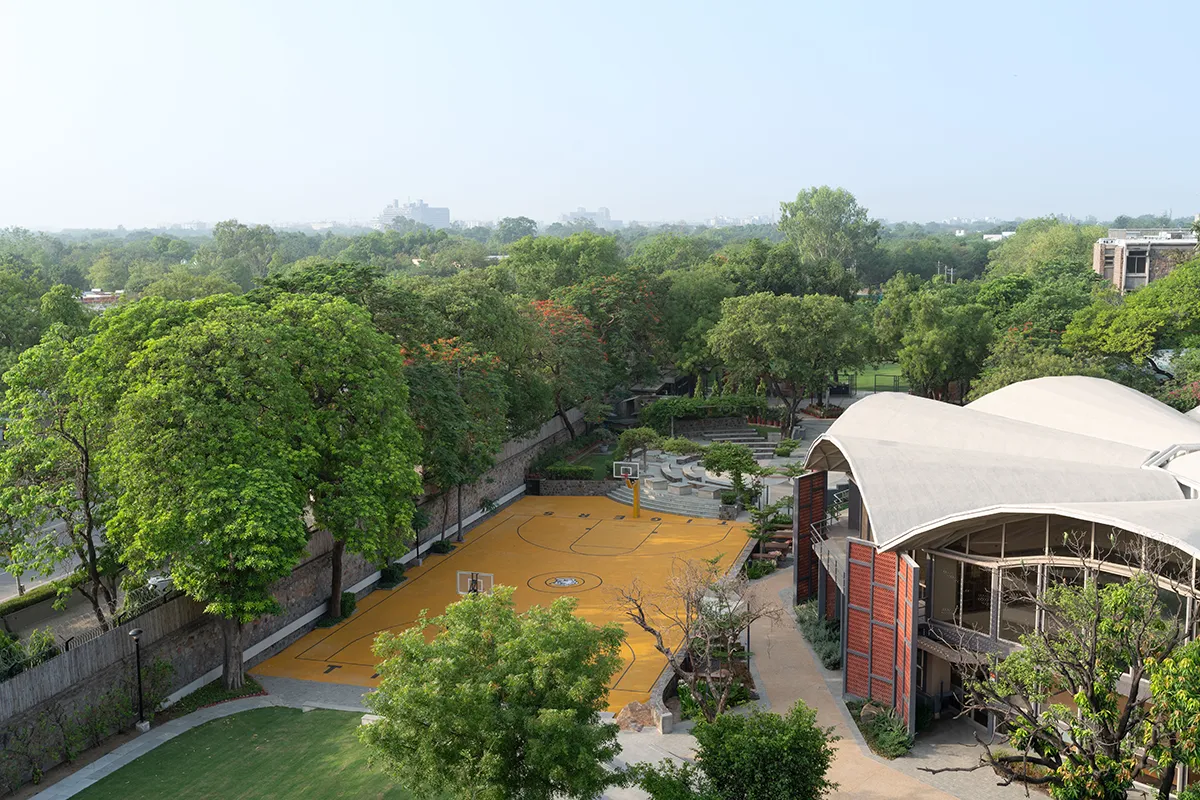
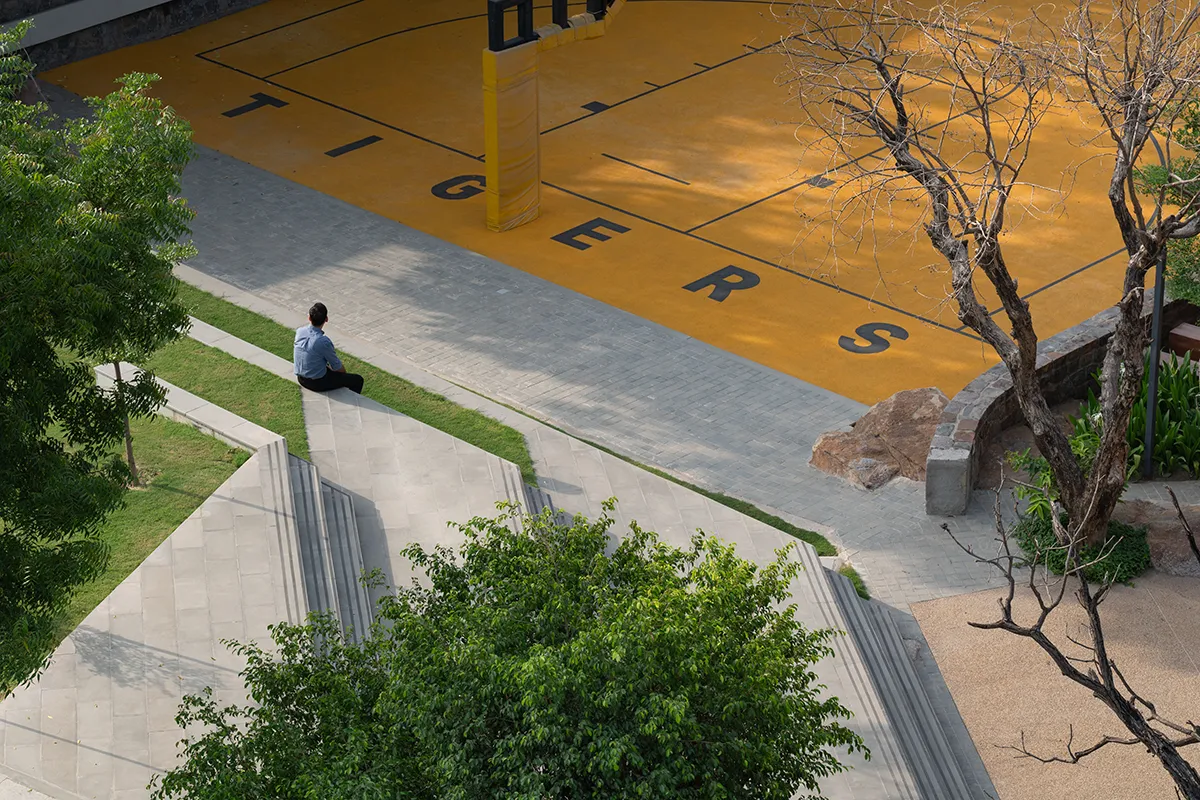
Furthermore, the design pays homage to the site’s architectural history by echoing the spatial rhythm of Stein’s library building. This connection to the past is paired with student-led farming initiatives that convert underused service areas into productive learning spaces. The design thoughtfully caters to a diverse user base, from young learners to faculty and visitors. While the primary users are middle and high school students, the cafeteria and surrounding areas serve as a shared hub.
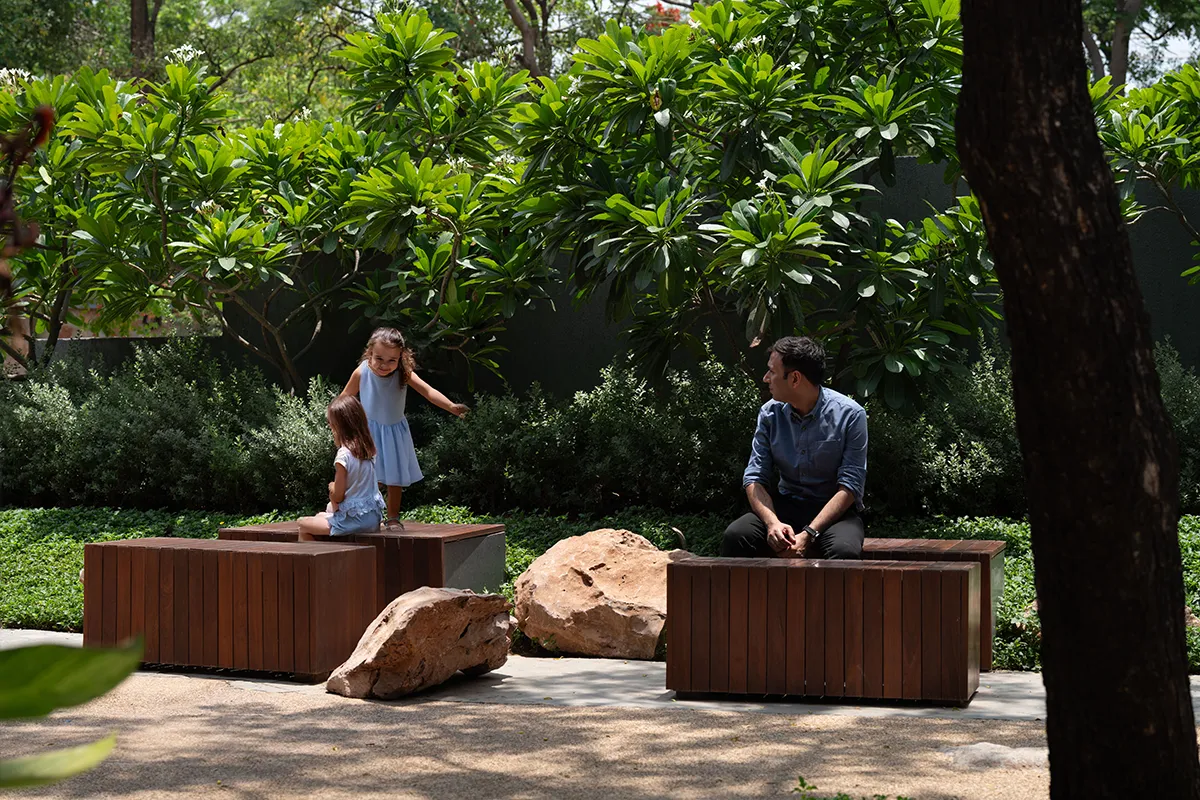
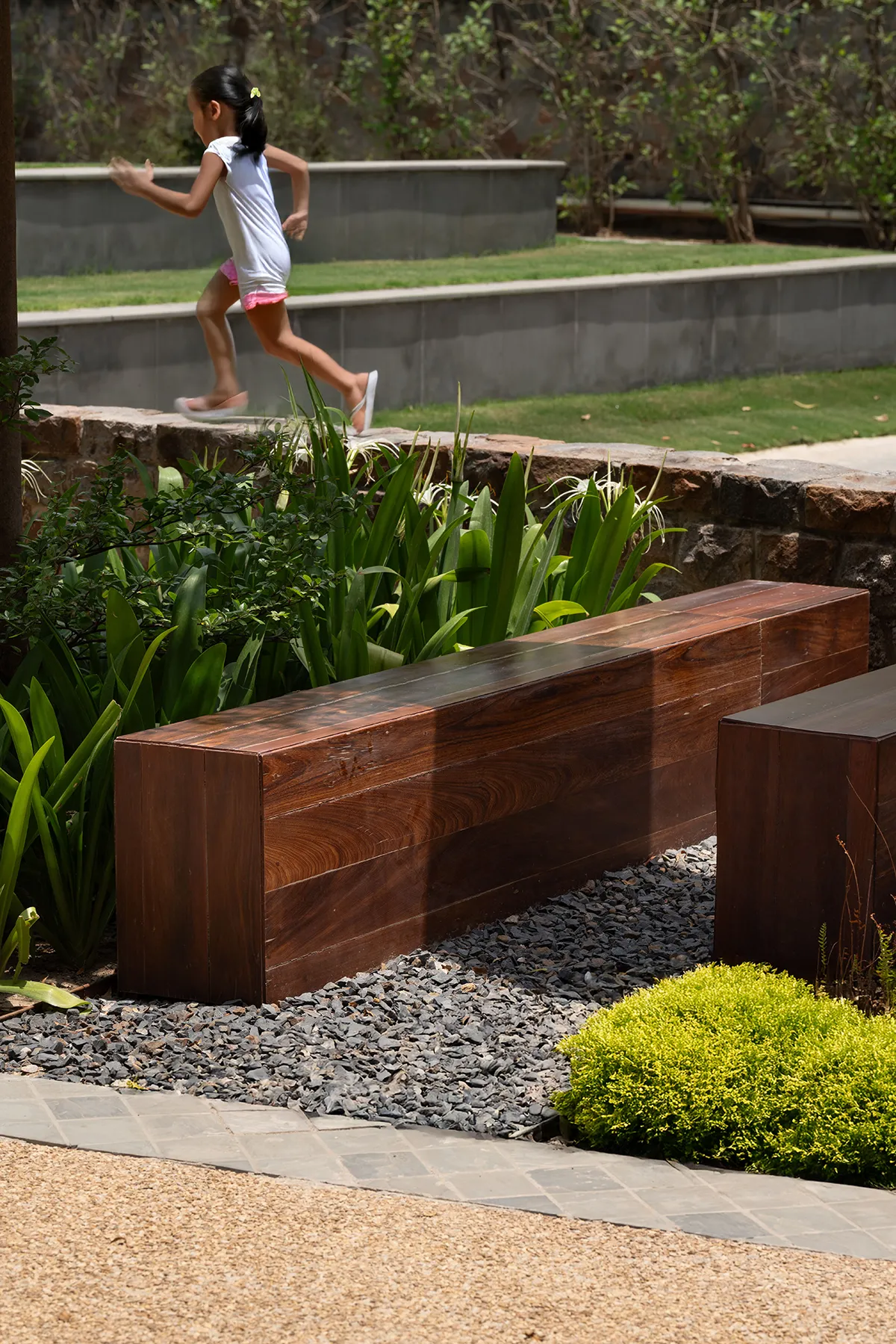
The landscape is designed for year-round comfort. The introduction of a mist-infused water channel is the solution for creating a cool microclimate during the intense summer heat, making the space usable and inviting, even on the hottest days. The use of perennials ensures year-round foliage presence and helps reduce seasonal maintenance. The planting and design choices are a direct response to Delhi’s extreme climate. Broad-canopy deciduous trees provide crucial shade in the scorching summer while allowing sunlight to filter through in winter. To combat the dust-laden winds, shrubs with dense foliage were incorporated that act as natural dust traps, improving local air quality. Inspired by the dry scrub forest, species such as Nikodea leucophyllum, Bougainvillea, varieties of fountain grasses, and other native and adaptive plant species like Canna indica, Plumeria alba, Quisqualis indica, Rhoeo bicolor, Mansoa alliacea and Gardenia jasminoides were used.
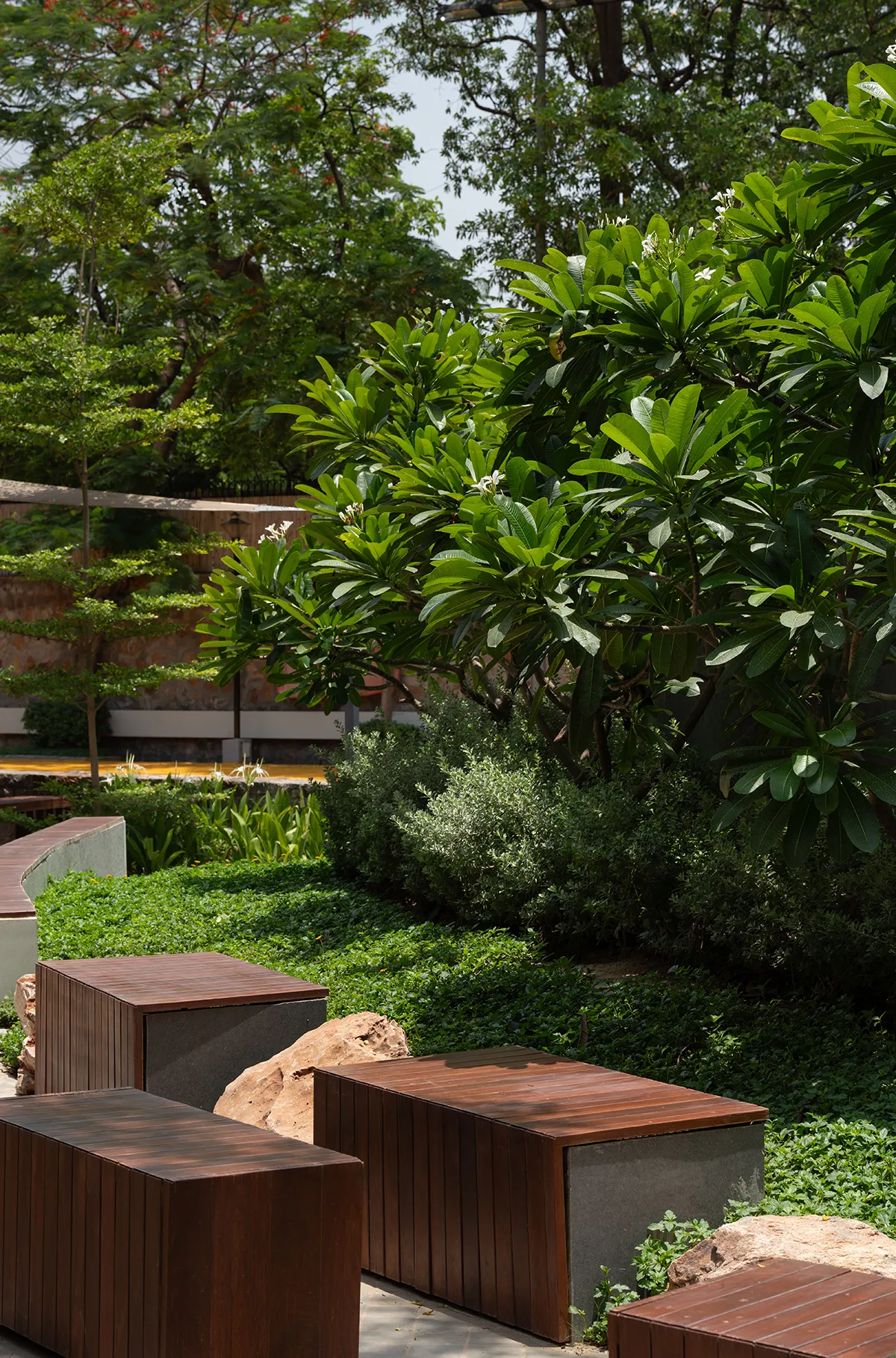
The material choices are deeply rooted in contextual relevance. Inspired by Stein’s library, the palette features native sandstone and limestone, selected for their low thermal absorption and durability. Wooden elements add warmth and tactility, while non-slip surfaces are a practical consideration for monsoon conditions. The materials were chosen to age gracefully, ensuring the landscape’s aesthetic and refined coherence while creating a robust public space.
American Embassy School
Landscape Architects: Paras Sareen and Associates
Architect: EDI
Image Credits: Nakul Jain
Storytelling: Vrinda Sarwal