
Annapolis’ floating wetland

baltimoresun.com reports

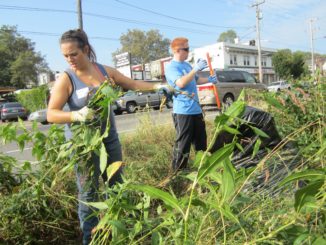
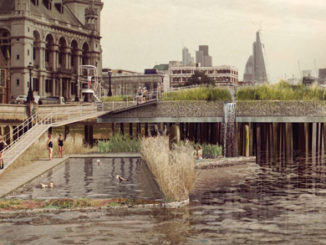
Annapolis intends to test a floating island in a local lagoon that, if successful, could help clean the water in the Chesapeake Bay, according to Mayor Ellen O. Moyer……
Floating islands are created from recycled plastics and planted with wetland plants that soak up nutrients from the water, said Steve Carr, the city’s environmental adviser. He said the project in Annapolis will act as a test to see whether the technology can be implemented in larger areas of the bay.

For more information about Annapolis’ floating wetland go to the [SOURCE: baltimoresun.com - Annapolis' floating 'wetland' could help restore the bay]

Ecological Agriculture: can it feed the world?

The latest edition of the Monthly Review (November 2009, Volume 61, Number 6) includes a paper from Jules Pretty is professor of environment and society at the University of Essex, UK. titled Can Ecological Agriculture Feed Nine Billion People?

Below is an extract from the paper

Something is wrong with our agricultural and food systems.Despite great progress in increasing productivity in the last century, hundreds of millions of people remain hungry and malnourished. Further hundreds of millions eat too much, or consume the wrong sorts of food, and it is making them ill. The health of the environment suffers too, as degradation of soil and water seems to accompany many of the agricultural systems we have developed in recent years. Can nothing be done, or is it time for the expansion of an agriculture founded more on ecological principles and in harmony with people, their societies, and cultures?

Read the full paper at the [SOURCE: MonthlyReview - Can Ecological Agriculture Feed Nine Billion People?]

Turenscape win World Architecture Festival Award


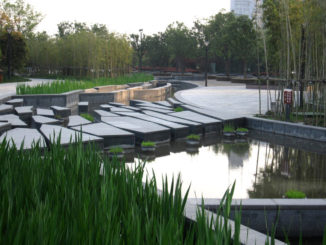
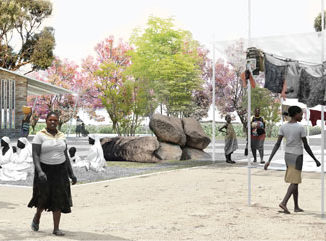
Turenscape (Beijing Turen Design Institute) has been awarded the Landscape Category award at the 2009 World Architecture Festival for a 22-hectare park in Tianjin, ChinaThe Adaptation Palettes: Regenerative Landscape Design

Through Regenerative Design and by allotting landforms, the natural process of plant adaptation and community evolution is introduced to transform a former deserted shooting range used as a garbage dump, into a low maintenance urban park; providing diverse nature’s services for the city including containing and purifying storm water; improving the saline-alkali soil, providing opportunities for environmental education and creating a cherished aesthetic experience.

For more information go to the [SOURCE: World Architecture Festival]

[IMAGE SOURCE: World Architecture Festival]

CROSS POSTED WITH CHINA LANDSCAPE ARCHITECT

Call for water savings proposals for Australian towns and small cities

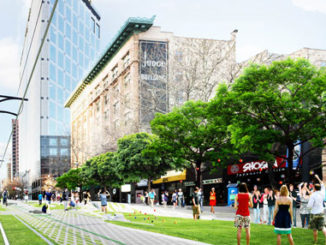
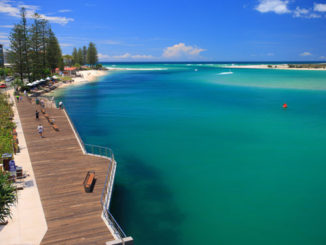
The Australian Government is seeking proposals to develop and implement practical projects to help secure urban water supplies in Australian towns and cities with fewer than 50,000 people.

“Funding under this program will support cities and towns with fewer than 50,000 people to improve the reliability, efficiency and sustainability of their urban water resources while reducing demand on potable supplies.

“Projects that could be supported include recycling and reuse, stormwater capture and reuse schemes, desalination and water sensitive urban design initiatives.”

Funding is capped at 50 per cent of total project costs, with the minimum Australian Government contribution of $250,000. While there is no maximum project size, the Australian Government contribution is capped at $10 million per project.

Projects must be completed by 30 June 2012.

Under an earlier stage of the Government’s National Water Security Plan for Cities and Towns, more than $100 million is earmarked for projects identified in 2007 election commitments.

Guidelines are available from www.environment.gov.au/water/programs/index.html or by calling 1800 218 478.

SOURCE: Minister for Climate Change and Water – Call for water savings proposals for Australian towns and small cities – 1 October 2009.

1 2 3