Johns Hopkins Hospital | Baltimore USA | OLIN

Johns Hopkins Hospital | Baltimore USA | OLIN

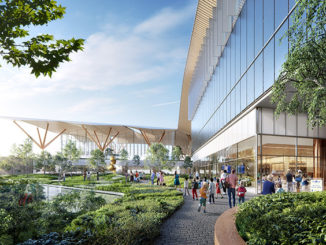
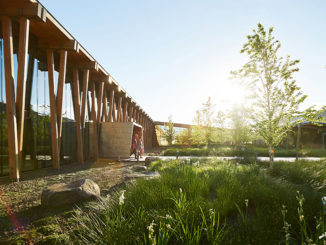
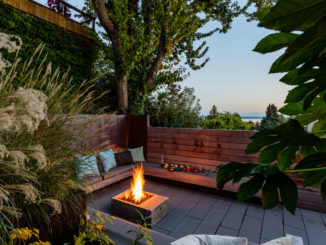
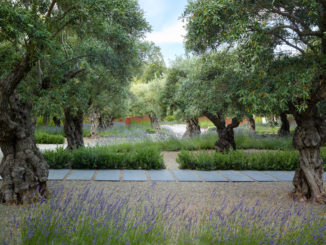
OLIN has created the site design for The Johns Hopkins Hospital’s new patient care building in Baltimore, Maryland. The gardens, including the Entry Court Gardens, the Western Courtyard Gardens, the Phipps Courtyard and the Little Prince Garden, along with the soaring lobbies, a handpicked art collection and cheerful-light filled patient rooms are designed to provide a welcome and caring environment to advance the healing process. The $1.1billion building was dedicated on April 12, 2012.

Burbank Water and Power EcoCampus | AHBE Landscape Architects

Burbank Water and Power EcoCampus

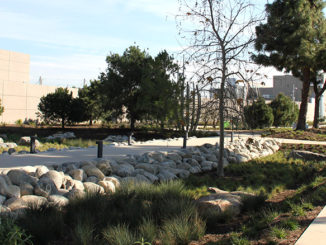
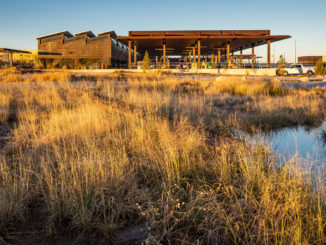
When Burbank Water and Power built an award-winning electric power plant in 2005, it also replaced several existing substations located on the campus. In restoring the old substation sites, BWP saw an opportunity to achieve something greater. Los Angeles based landscape architecture firm AHBE Landscape Architects was commissioned to create an ambitious master plan for an EcoCampus that focused on transforming the grounds from an aging industrial site into a regenerative green space.

Continue reading Burbank Water and Power EcoCampus | AHBE Landscape Architects

USA urban forests losing ground

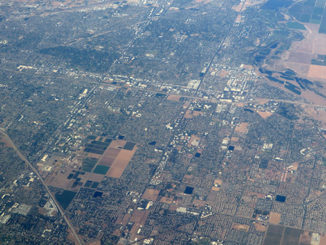
Albuquerque Aerial 2006 (Flickr User kla4067)

National results indicate that tree cover in urban areas of the United States is declining at a rate of about 4 million trees per year, according to a U.S. Forest Service study published recently in Urban Forestry & Urban Greening.

Tree cover in 17 of the 20 cities analyzed in the study declined while 16 cities saw increases in impervious cover, which includes pavement and rooftops. Land that lost trees was for the most part converted to either grass or ground cover, impervious cover or bare soil.

Of the 20 cities analyzed, the greatest percentage of annual loss in tree cover occurred in New Orleans, Houston and Albuquerque. Researchers expected to find a dramatic loss of trees in New Orleans and said that it is most likely due to the devastation of Hurricane Katrina in 2005. Tree cover ranged from a high of 53.9 percent in Atlanta to a low of 9.6 percent in Denver while total impervious cover varied from 61.1 percent in New York City to 17.7 percent in Nashville. Cities with the greatest annual increase in impervious cover were Los Angeles, Houston and Albuquerque.

Continue reading USA urban forests losing ground

studio a+i wins AIDS Memorial Park Design Competition

AIDS Memorial Park Design Competition
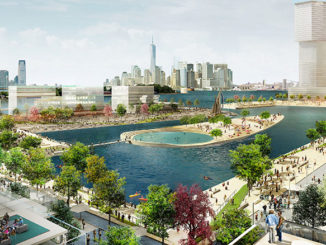
Organizers of New York City’s proposed AIDS Memorial Park  today announced the winners of their design competition. First place was awarded to Brooklyn, NY’s studio a+i: Mateo Paiva, Lily Lim, John Thurtle, Insook Kim, and Esteban Erlich, with a rendering by Guillaume Paturel, for their design “Infinite Forest.” The design was selected from 475 entries submitted between November 29, 2011 and January 21, 2012, representing more than 26 U.S. states and 32 countries on six continents.

Continue reading studio a+i wins AIDS Memorial Park Design Competition

THE LENS by Michael Maltzan Architecture wins St.Petersburg Pier Design Competition

St.Petersburg Pier Design Competition Finalists©Michael Maltzan Architecture
The Judging Panel has selected “The Lens” design by Michael Maltzan Architecture with Tom Leader Studio. The City Council will hold a workshop to decide if they accept the panel’s decision and to engage the winner in the next stage of developing the design.

The jury evaluating the proposals is comprised of: Stanley Saitowitz, a South African architect and an architecture professor from University of California, Berkeley; James Moore, PhD, a Tampa-based urban designer and former architecture and design professor at USF; Susan Fainstein, PhD, a Harvard University urban design professor; City Council Member Leslie Curran and Pinellas County Commissioner Ken Welch.

The new Pier is not an icon unto itself. It is instead a lens that frames the City’s relationship to the water, changing how St. Petersburg views its present and its future. While the Pier will remain an important attraction for visitors, we believe that the Pier must be first for the people of St. Petersburg, an active, vital part of the City’s life and culture. Operating on multiple scales of renewal—individual, urban, economic, ecological—this new Pier serve as a new kind of fountain of youth for St. Petersburg and its citizens, a symbol of the renewed vitality of the City, a platform for continued growth, and a destination within the City, the region, and our nation.  - Michael Maltzan Architecture (Competition Entry Design Statement)

1 2 3 4 5 6 7 8