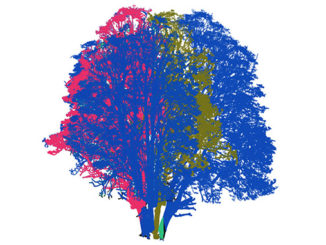
Capitol Canopy | Sacramento Capitol Mall Design Competition Winner | ATLAS Lab

Capitol Canopy | Sacramento Capitol Mall Design competition | ATLAS Lab
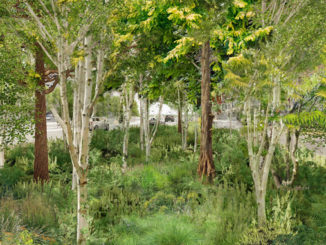
The urban forest is an important part of every thriving city. Tree canopies provide critical services for the city, including reducing heat island effects though the provision of shade and the creation of microclimates.
Continue reading Capitol Canopy | Sacramento Capitol Mall Design Competition Winner | ATLAS Lab

This Week In Landscape | 30 September 2012

Rounding out the week with landscape links from around the world

How can cities be designed for sustainable living? | Caroline Holtum | Guardian
A new interactive exhibition, Our Urban Future, explores the importance of cities in making the world a more sustainable place.

Bloomberg to High Line Haters: Cities Change, Get Over It | Matt Chaban | New York Observer
“Cities that don’t change—if we didn’t change, Central Park would still be a shantytown; if we didn’t embrace new technology or medicines, life expectancies would still be 25 years old,” the mayor said.

UConn’s Great Lawn Remains Central to Campus Identity | UConn Today
The University of Connecticut’s iconic ‘Great Lawn’ was the center of attention on Wednesday at a celebratory event sponsored by the UConn Student Chapter and the Connecticut Chapter of the American Society of Landscape Architects.

DIY Urbanism Makes Creative Use of Public Spaces | Tod Newcombe | Governing.com
As the economy continues to take big bites out of arts and city planning budgets, this bottom-up approach is changing the look of some cities. Are governments ready to embrace these grassroots ideas?

Project aims to crowdsource what makes a happy city | BBC
A project to crowdsource the most peaceful and happy places in London has been launched by researchers at Cambridge University.

Restoring the ‘urban forest’ | André Coleman | Pasadena Weekly
Councilman Masuda calls for volunteers to help replace trees lost in last year’s windstorm.

Olympic regeneration claims are “bullsh*t,” says Rowan Moore | Dezeen
They say it’s about regeneration, it’s about boosting sporting legacy, it’s about boosting business, it’s sustainable. All these things are absolute…….”


This Week in Landscape | April 1 2012

This weeks round-up of landscape news from around the web

Image Credit: Flickr user Andy Carter

The increasingly rare sight in UK’s green spaces – children playing | Martin Wainwright | Guardian
“The National Trust says that despite warnings, Britain’s kids are increasingly staying indoors and losing touch with nature….”

Celebrate Spring at the Brooklyn Bridge Park | Kadie Yale | Metropolis Magazine
Already in bloom, the gardens at Brooklyn Bridge Park’s Pier 1 give those of us who can’t get out of the city for a day the opportunity to find the beauty of nature just across the water

Livable streets in Calgary | Steven Snell | Calgary Herald
“A complete street accommodates all of its users where pedestrians and cyclists are not lower order to motorized traffic…. ”

Saskatoon’s urban forest focus of pollen audit | Betty Ann Adam | Star Phoenix 
Unfortunately, the lack of females to draw in the pollen from the males leaves the tiny allergenic grains to bombard the vicinity of the tree, causing and aggravating allergies, says horticulturalist Tom Ogren.

How full is full? Planning Sydney to be big, sustainable and healthy | Anthony Capon | The Conversation

For more news during the week become a World Landscape Architecture fan on Facebook,  Join our LinkedIN group,  Follow us on Twitter @wlandscapearch or Weibo and then  Circle us on Google+

Find a good link during the week? send it to [email protected]

Image Credit: Flickr user andy_carter

This Week in Landscape | 25 March 2012

This weeks round-up of landscape news from around the web

Jungleland - The Lower Ninth Ward in New Orleans Gives New Meaning to ‘Urban Growth’ | Nathaniel Rich | New York Times Magazine
The power of nature is shown by the ‘jungle’ that is recolonising parts of the Lower Ninth Ward in New Orleans that have been abandoned since Hurricane Katrina in 2005.

Finding the urban forest in your neck of the woods | Laurie Casey | Chicago Tribune
Boasting millions of trees, other plants, and wildlife, the urban forest contributes valuable benefits. It produces fresh oxygen, reduces urban heat island effects, and stores carbon. Studies show being around or seeing trees even improves our mood and helps us heal from surgery faster.

Cloned trees fuel urban pollen count | Randy Shore | Vancouver Sun
Planting male clones effectively doubles the amount of pollen released, horticulturalist says.

He changed Bangalore’s landscape | Deccan Herald
Gustav Krumbiegel established the Horticultural School in the erstwhile Mysore state, a first for India.

America’s Coolest Driveways | Tanya Mohn | Forbes
“Good driveway design is all about the arrival experience,” says Charles A. Birnbaum, founder and president of The Cultural Landscape Foundation

For more news during the week become a World Landscape Architecture fan on Facebook,  Join our LinkedIN group,  Follow us on Twitter @wlandscapearch or Weibo and then  Circle us on Google+

Find a good link during the week? send it to [email protected]


Tennessee’s Urban Forests Valued in the Billions

Overton Park | Memphis, Tennessee | Image Credit: Flickr User: duluoz-cats

Tennessee’s urban forests, currently valued at about $80 billion, also provide almost $650 million in benefits such as carbon storage, pollution removal, and energy reduction according to a new U.S. Forest Service report.

The authors of Urban Forests of Tennessee, 2009 (published in early 2012) found there are 284 million trees in urban areas in the state, with canopies covering 33.7 percent of 1.6 million acres of urban area. Those urban forests provide an estimated $204 million per year in pollution removal and $66 million per year in energy savings. The study is the first of its kind in Tennessee.

Continue reading Tennessee’s Urban Forests Valued in the Billions

1 2