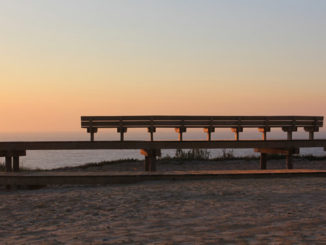
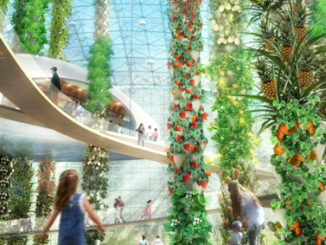
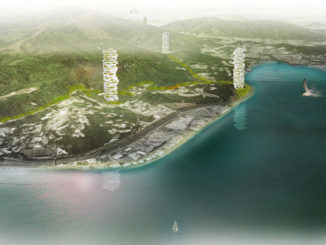
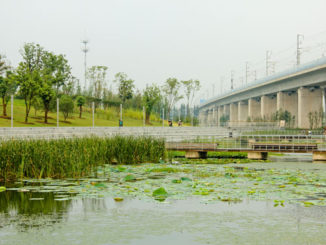
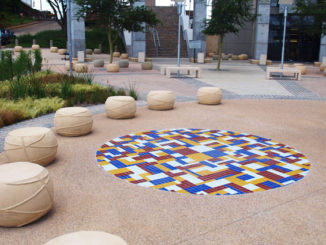
Working waterfronts are constantly in flux; crusty, utilitarian, muscular and dissolving, with temporal qualities that engage all of our senses. Yet contemporary waterfront redevelopments are often characterised by the removal of the very qualities that attract us to these places. At Auckland’s Wynyard Point redevelopment these conventions are challenged in a development that anticipates transforming a forlorn industrial and maritime precinct into a layered, mixed-use precinct.
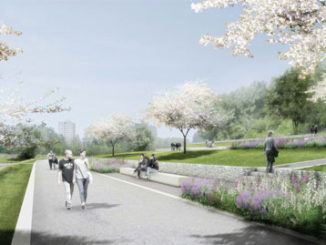
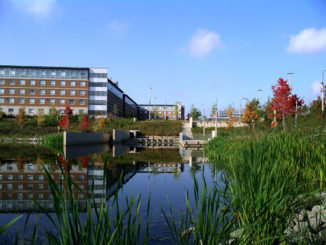
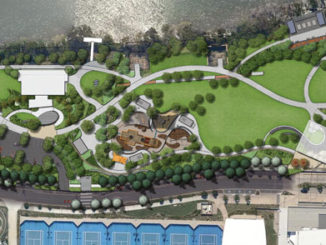
Newport Green, a park comprising a 4.25-acre waterfront site at the north end of Newport, New Jersey, is now open to the public. Located in a large, mixed use community across from lower Manhattan, the park provides comprehensive amenities requested by local residents not available in other area spaces. The first phase of the park, comprising an all-weather play field, playground, display and native gardens.
Perkins+Will’s new Atlanta office presented the opportunity to transform an existing building in the heart of Midtown by both reusing the building’s worthy assets and correcting its signature faults. Recently certified LEED Platinum, with the highest score ever recorded in the Northern Hemisphere, the success of the project suggests that reuse and renovation is central to the concept of sustainability. While earning accolades for excellence in building design, one of the project’s most profound features is its renewed connection to the street. Like the building, the site design represents the humanistic values and sustainable aspirations of the firm through open, welcoming spaces and material and detail choices. Continue reading Peachtree Street | Atlanta USA | Perkins+Will
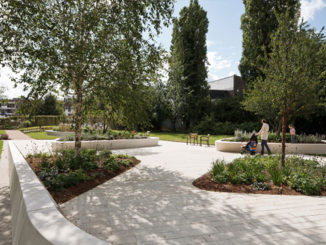
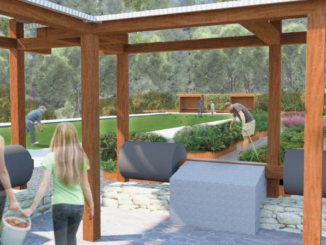
JMD Design were commissioned by Stockland to design document and provide construction quality advice for a feature park within a new subdivision project at Glenmore Ridge, Penrith. The eastern edge of the new park had been designed and built some ten years ago, hence the name Jacaranda Park. It was decided that the new park should break with the gardenesque image of the eastern half and create a new strong identity to the new suburb dropping away to the west.
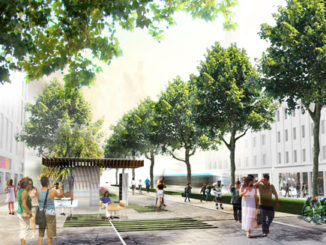
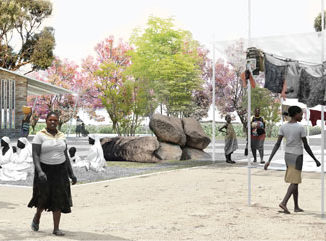
Three international teams (51N4E, Studio 012, KCAP) have developed visions for how Brussels will look in 2040. The visions are now being shown in the Brussels 2040: Three Visions for a Metropolis exhibition at the Centre for fine Arts in Brussels. The three teams have produced videos, photos, models, urban master plans to present their visions which hope to provide answers for What will Brussels be like in 2040 if its demographic growth continues? How will people get around the city if the motor car is no longer a sustainable means of transport? How can we reduce the social divide and avoid a dual city? How can we offer everyone an opportunity to live and work in the city with dignity? How can we coordinate the development of Brussels with its hinterland?